Noeul Camping Ground: Kolon Aerolite 2 Backpacking Review
Camping · Published 7/1/2023 ·
[Noeul Camping Ground
108-1 Haneul Gongwon-ro, Mapo-gu, Seoul
](#)
This is Noeul Camping Ground, way out on the western edge of Seoul in Sangam-dong. Booking a spot the normal way is brutal — sometimes the slots are gone within a second of opening. But if you check the site now and then, usually around a Wednesday or Thursday, cancellations do pop up. That’s how I managed to snag one and head out.
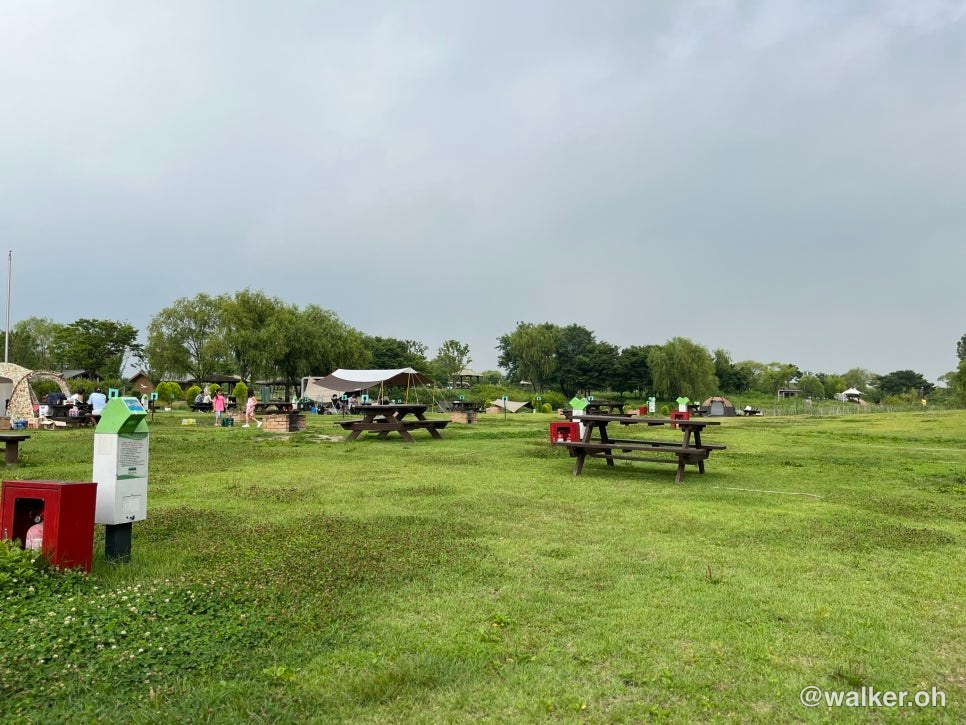
It had poured rain the day before, but this day was crystal clear. And hot. I went without a tarp, so I headed out late in the afternoon, but thanks to all that rain — there was still water pooled on the ground — it was incredibly humid… and the mosquitoes were relentless. Plenty of other campers had mosquito coils burning all over the place while they tried to enjoy themselves.
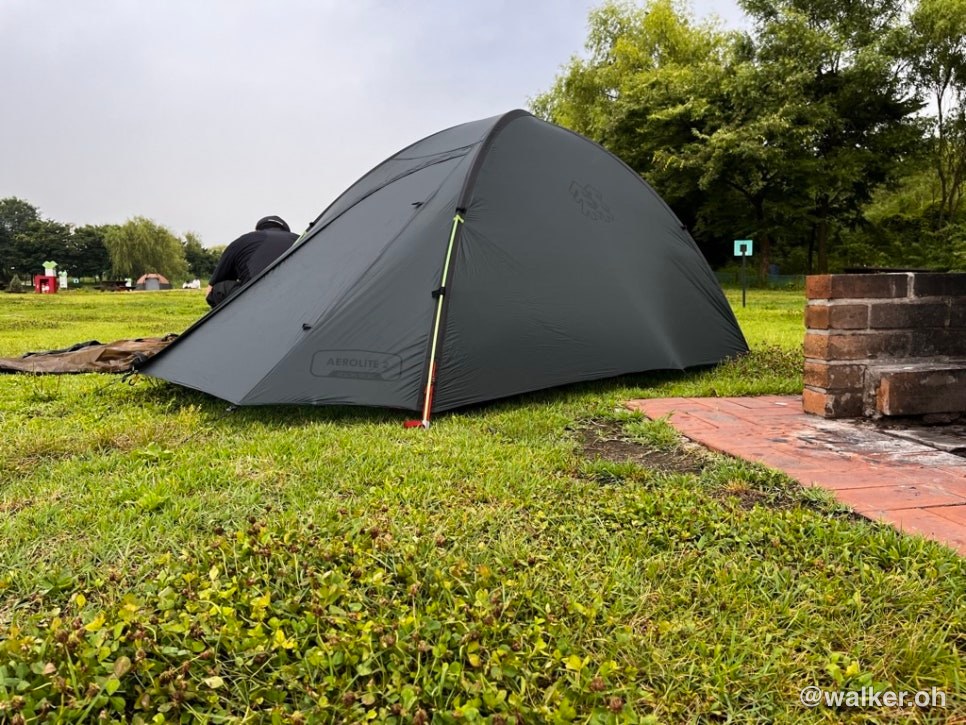
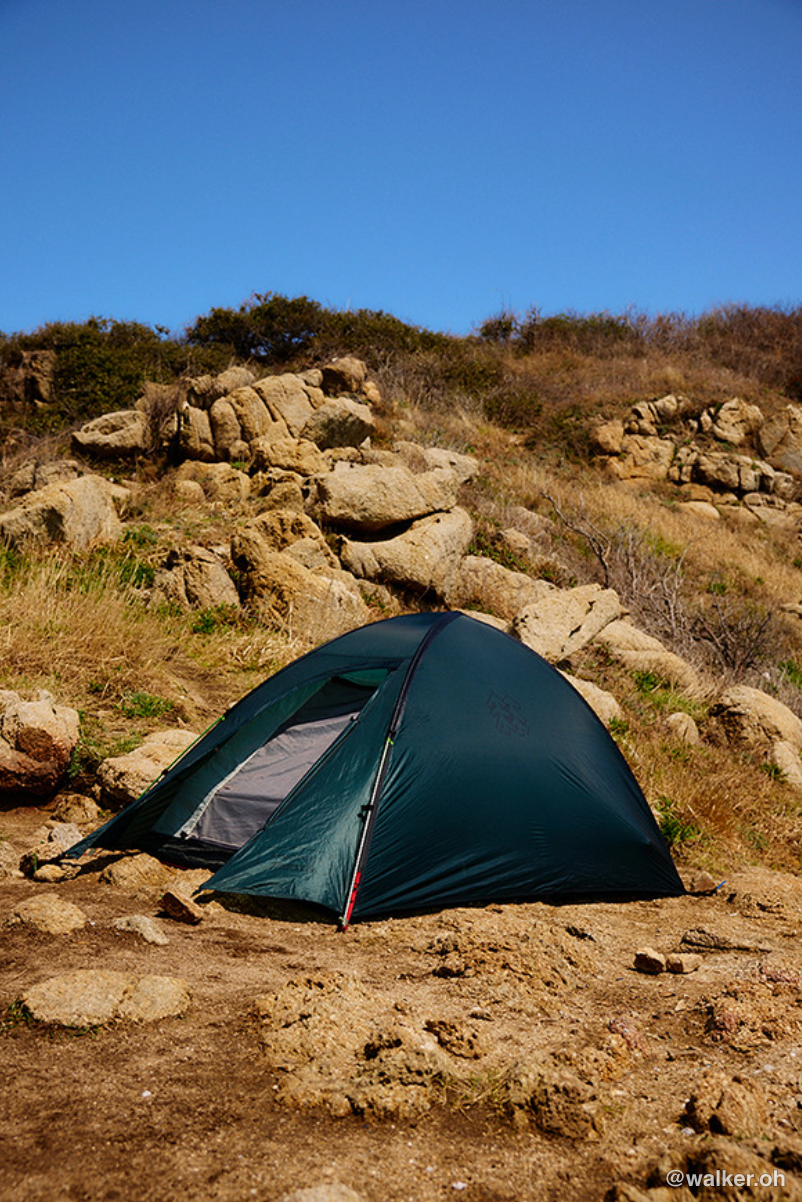
There wasn’t a great spot open, so I pitched right next to a fire stand. This is the Kolon Aerolite 2 I just picked up. It’s the green version, which is sort of a limited edition — most other folks seem to go for the yellow. It’s a double-wall, freestanding tent that needs a minimum of 3 stakes, or 5 if you want it pitched razor-sharp. This time I brought 6 stakes, but next time 5 should do. It has the classic dome-tent perks: quick setup and a structure that handles wind well. The vestibule is small but it’s there, with enough room to comfortably stash a couple pairs of hiking boots. The design doesn’t ventilate amazingly well, but the fly sits slightly off the ground all the way around, so you can count on decent airflow when there’s a bit of a breeze. Inside there’s a single door at the front and a vent at the back of the ceiling, though it’s not very big. With the previous day’s rain still not dried up — the ground was downright muddy — and barely any wind, condensation was running down the fly in streaks. The inner tent stayed dry, but you could definitely feel the humidity. My sleeping bag didn’t get noticeably wet, and even with the footprint having a flaw, there was no leaking into the inner tent.
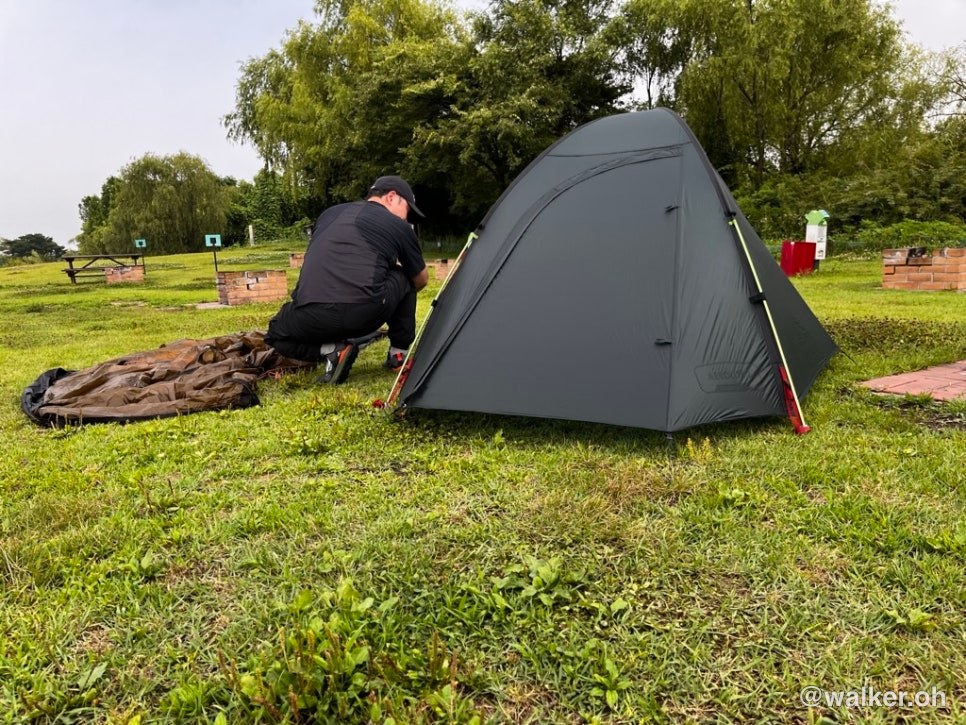
Here’s the front. The door opens in a D shape and you can roll it up and fasten it to the right. The pole only feeds in from one side; the other end is closed off. That means you can do the whole pitch standing in one spot, and even accounting for fabric shrinkage in winter, setup shouldn’t be much of a hassle. You could add a bit more tension at the pole cups, but I left it as is. The front fly requires 2 stakes as a must — those 2 stakes are what create the tension that forms the vestibule in the first place. The footprint doesn’t cover the vestibule area. Personally I prefer it when the footprint only covers the inner tent, so I’m very happy with this layout. And naturally, skipping that section shaves off a bit of weight too.
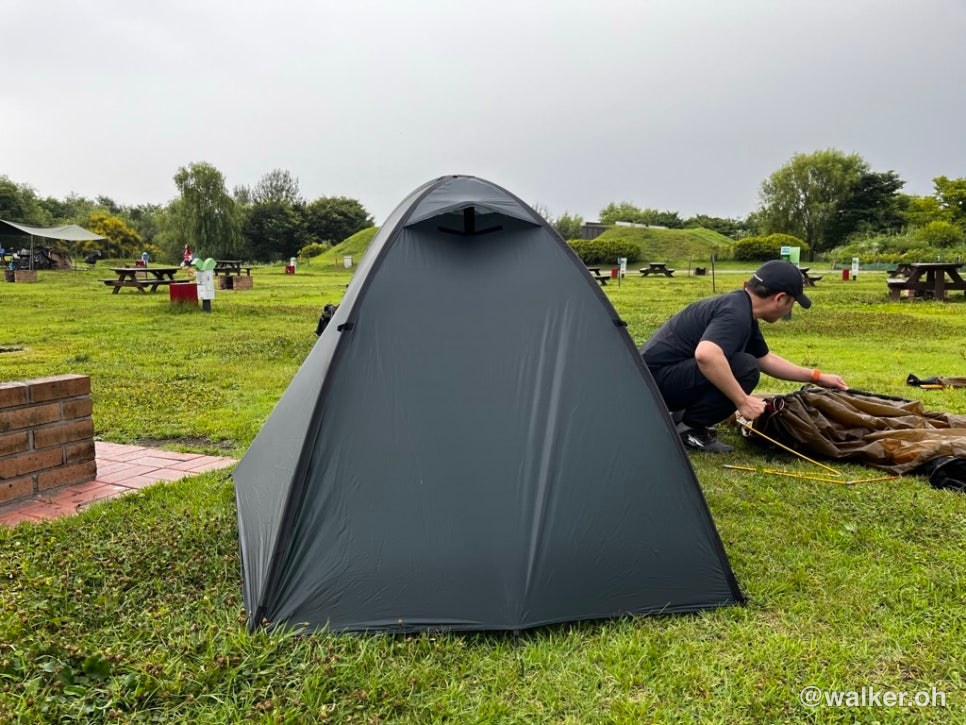
This is the stake-out at the back tail end. To build the tension that forms the vestibule, the rear stake-out is essential. The side stake-out you can see on the left is more of an optional thing, but adding stake-outs on both sides helps with internal ventilation, condensation, and maintaining an air layer in the dead of winter — so if space allows, going with 5 stake-outs seems best for using this tent.
Looking at the rear vent from the inside, it strikes me as a touch small. I kind of wish they’d been bolder with it, like Hilleberg tents. Then again, since the fly and inner tent are spaced apart throughout, maybe it doesn’t matter all that much.
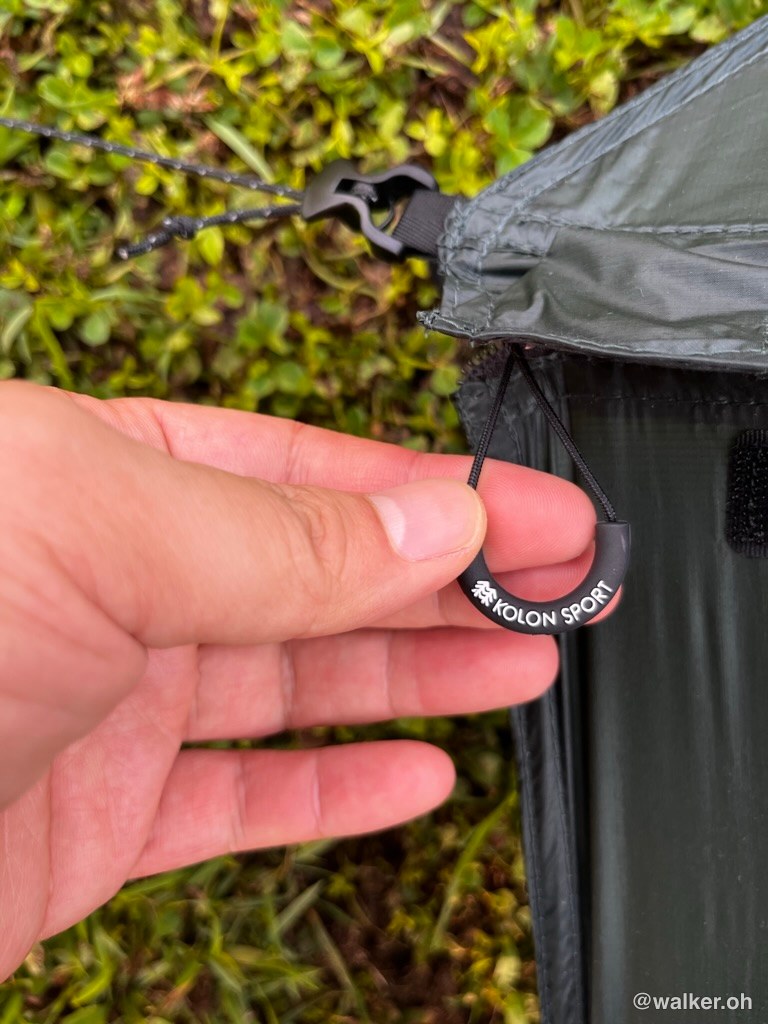
Here’s the zipper on the fly. They finished it off with a pull loop stamped with the Kolon logo so you can open and close it even with gloves on. Anyone who’s experienced how miserable it is to peel off your gloves to work a zipper in the dead of winter will appreciate this one ^^
Previous image Next image
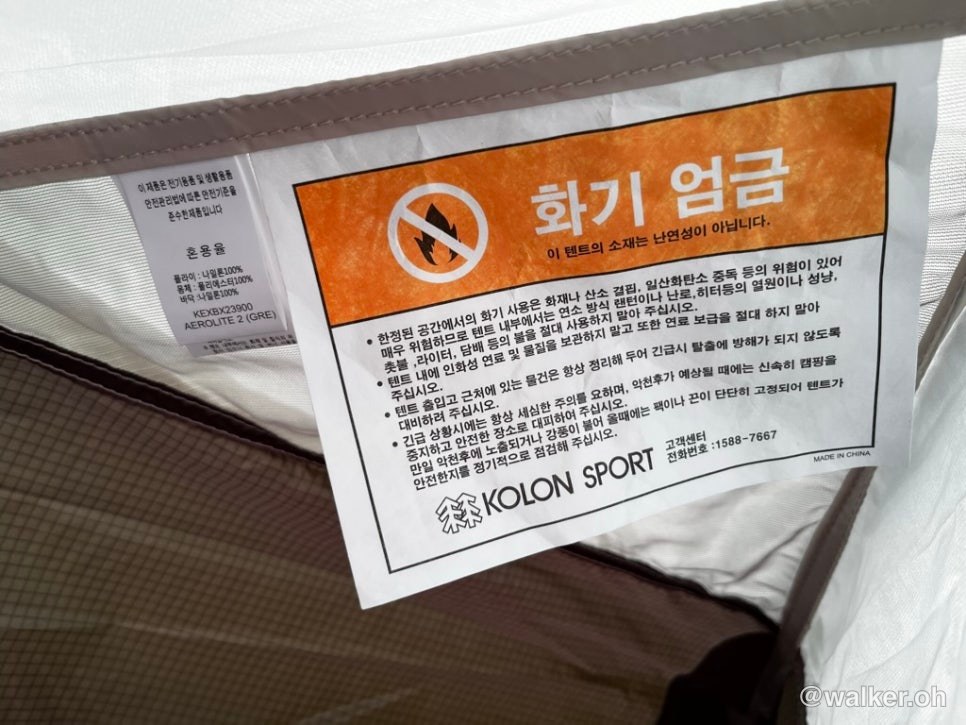
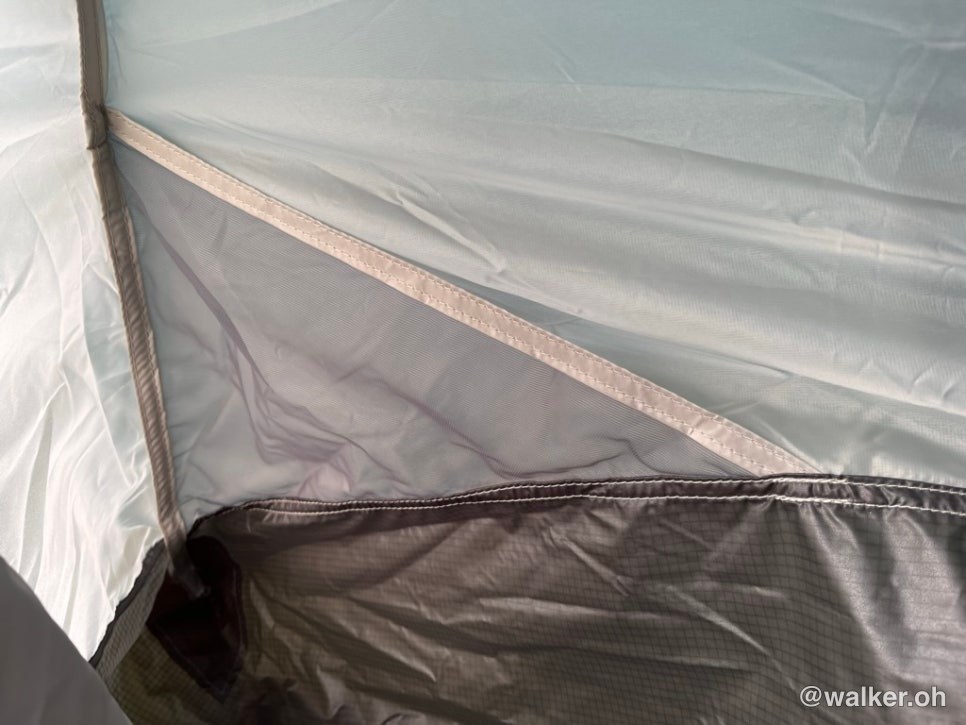
These are the pockets on the left and right of the inner tent. There’s a “no open flames” warning and what looks like a materials/composition label, plus a pocket. There are inner pockets, but they’re not big. A phone, a battery, earphones, or car keys will fit, but it’s a bit awkward — and the reason why comes up later.
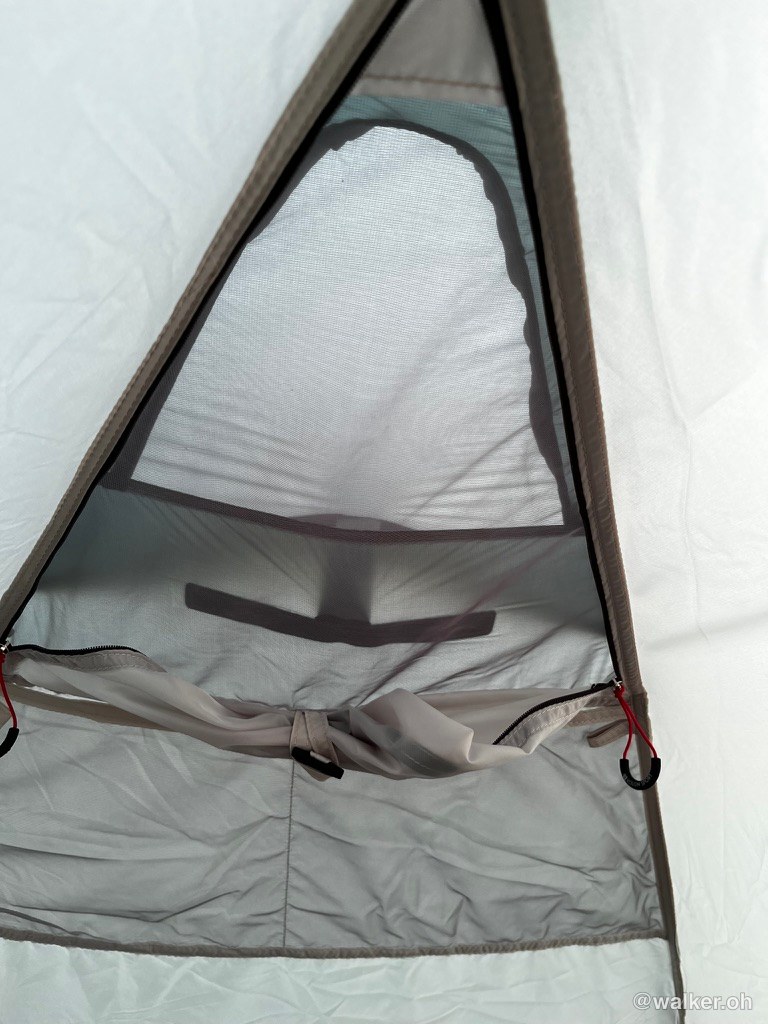
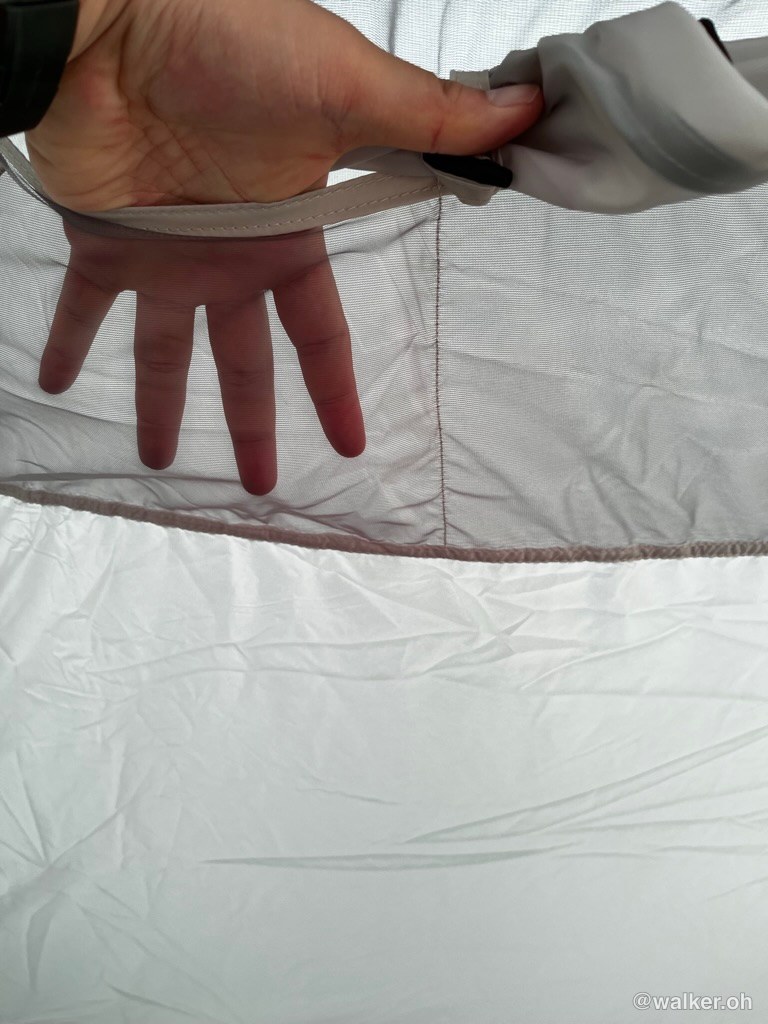
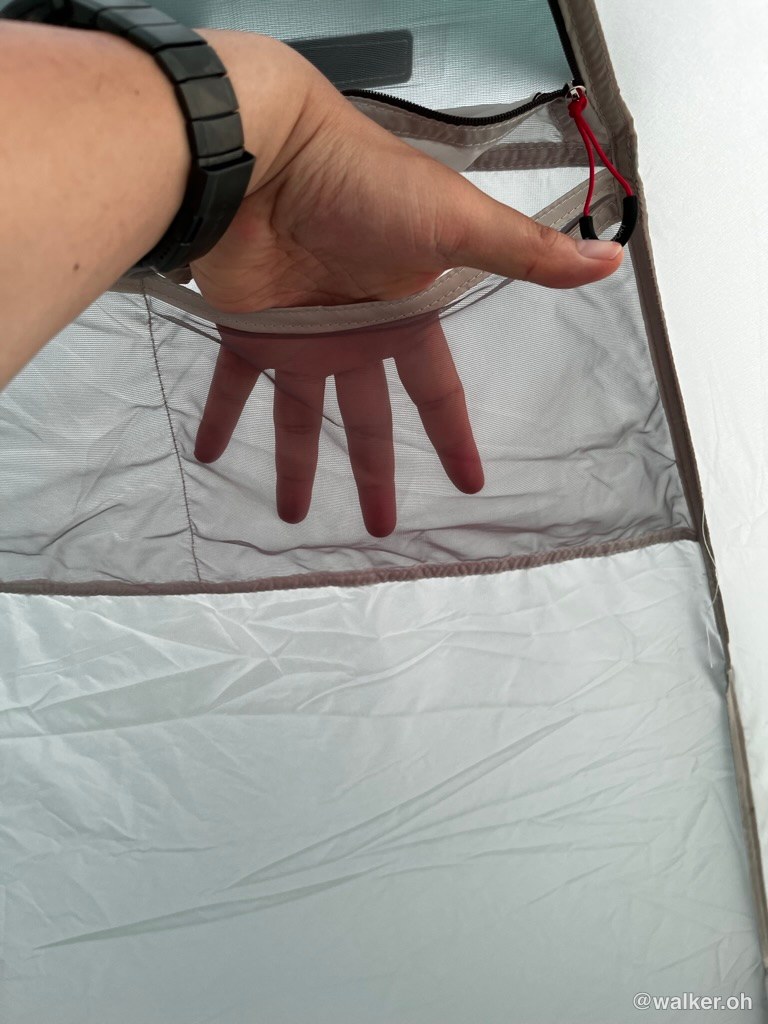
Over at the rear ventilation area, there are 2 more big pockets.
Previous image Next image
I’ve got fairly big hands, and even so more than half of my hand fits in this pocket. There’s a lantern hook up top, but depending on the lantern, some are tricky to hang — in that case it worked great to just toss it into that upper pocket. That’s exactly what I did.
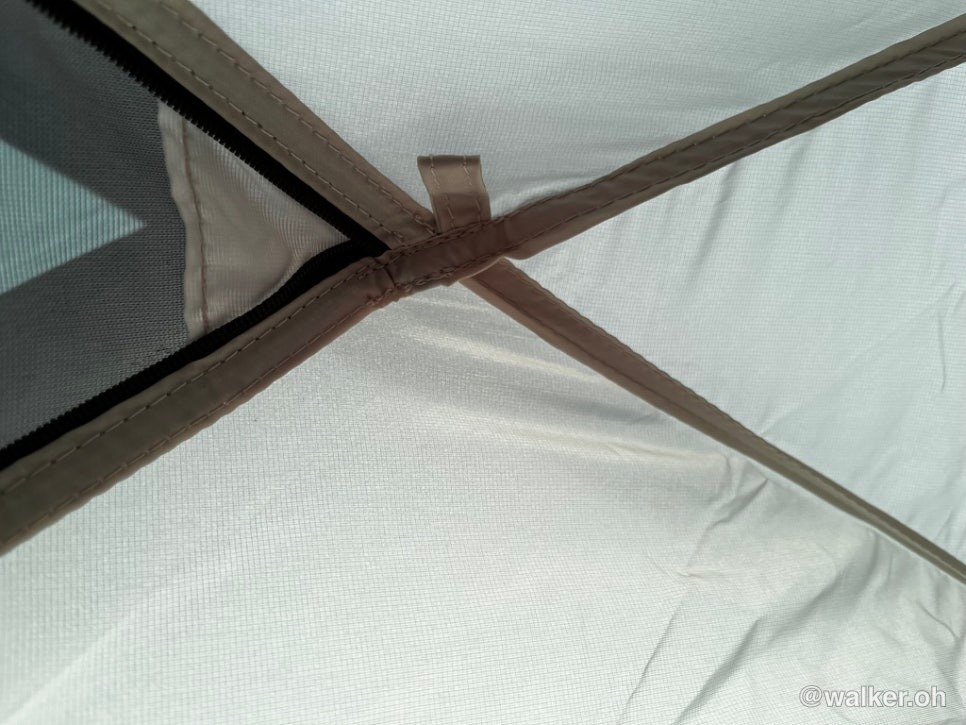
There’s one lantern hook on the ceiling, so I should hang a lightweight carabiner from it.
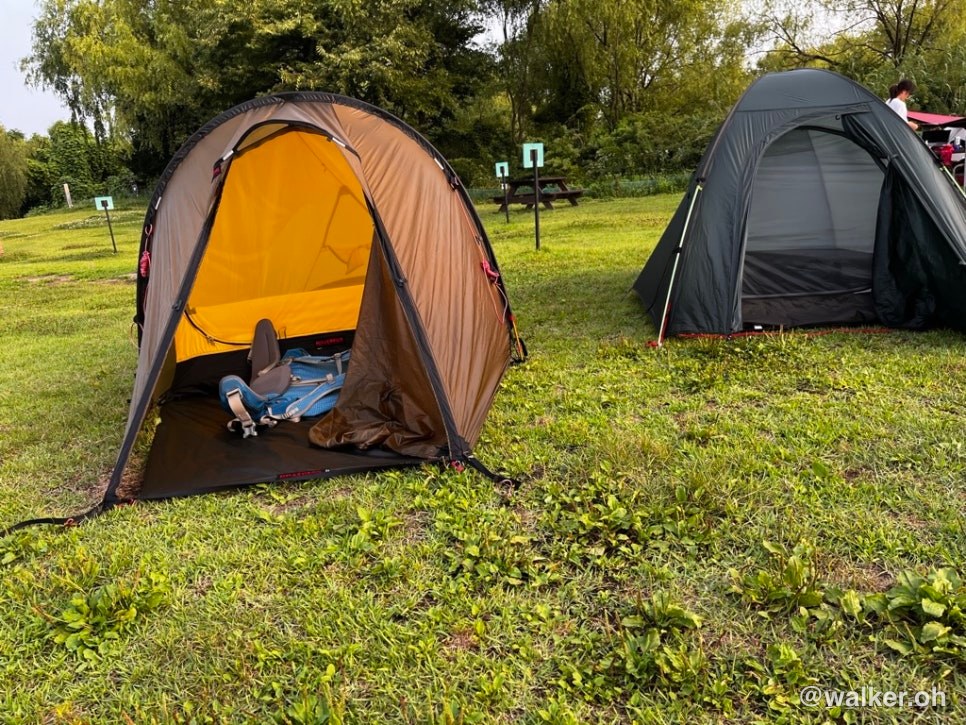
This is the Hilleberg Enan belonging to the friend who came with me, set up next door. There’s just no beating a tunnel-style tent for interior space. The vestibule is about 4 times bigger too. It gives you exactly as much room as its weight and bulk suggest.
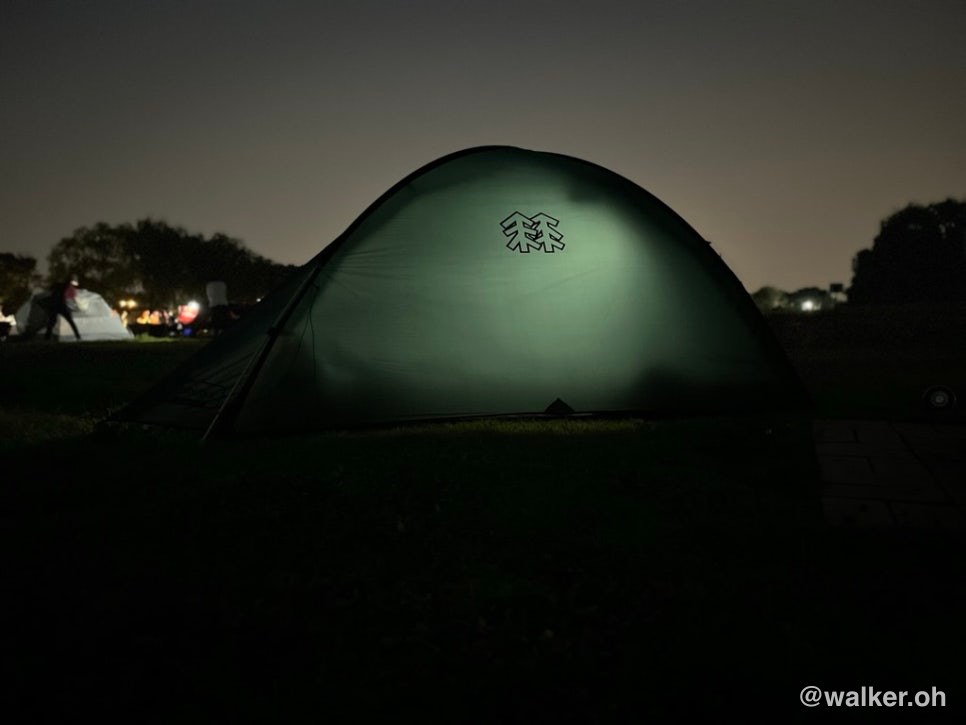
I waited for the sun to set so I could photograph the tent glowing green. Shooting handheld on my phone, I fired off several shots and barely salvaged one. Not much light leaks out, which actually works as a sort of blackout curtain that lets you sleep in a bit at sunrise. I’m the type who pops awake the moment it gets bright — sunrise that day was around 5 a.m., but I didn’t open my eyes until 6.
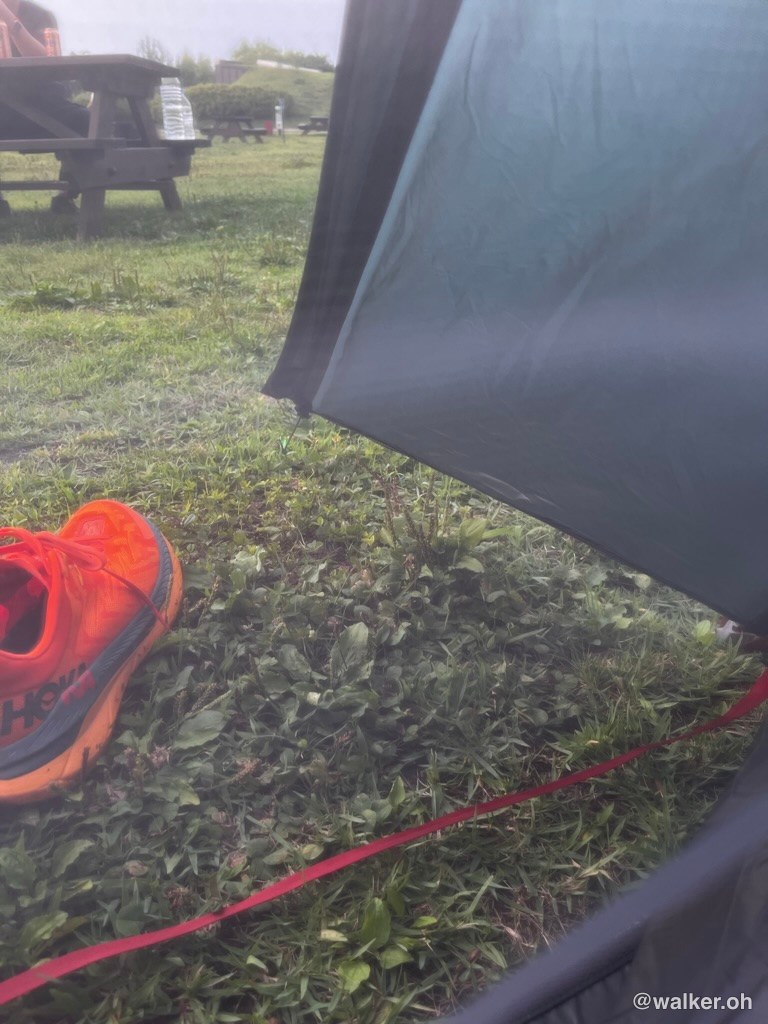
This is the vestibule with the mosquito net closed. It’ll definitely hold 2 pairs of hiking boots, and if you stand a backpack up in between, there’s plenty of room for two people’s packs. I just shoved my pack into the inner tent and slept that way, which was a little uncomfortable. Next time I plan to leave it in the vestibule while I sleep.
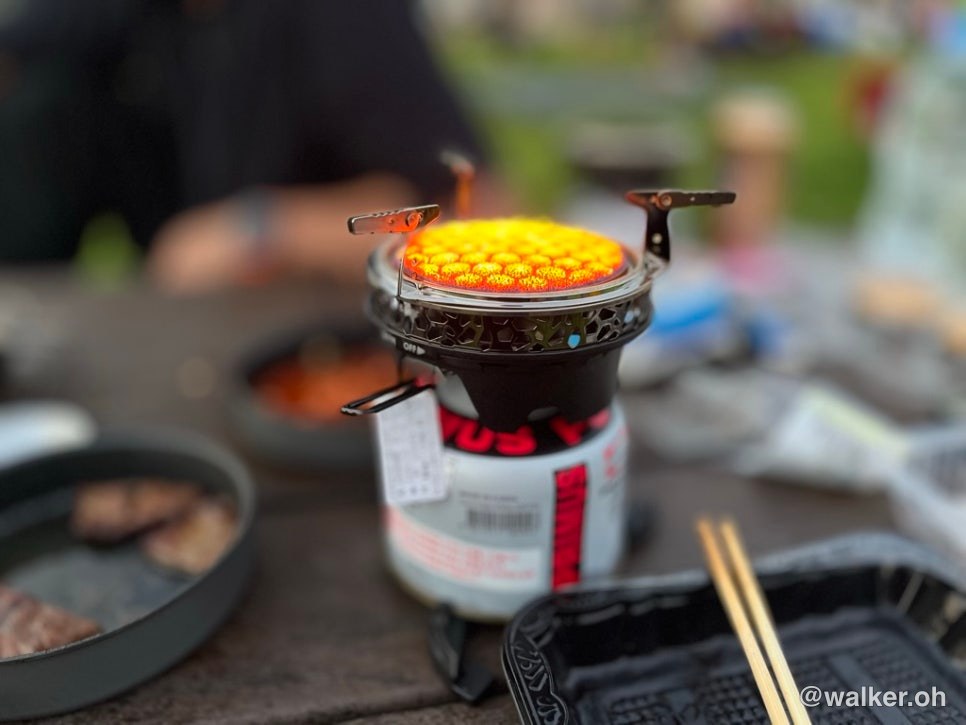
I grilled up some beef nicely on the Kovea Alpine Master — “Koalma,” as it’s nicknamed. It’s a genuinely versatile cookware set and worth having one around, though for backpacking that doubles as hiking it’s big and heavy. For a slightly minimalist outing like camping at Noeul, the setup is a perfect fit — pot, frying pan, and burner all sorted in one.
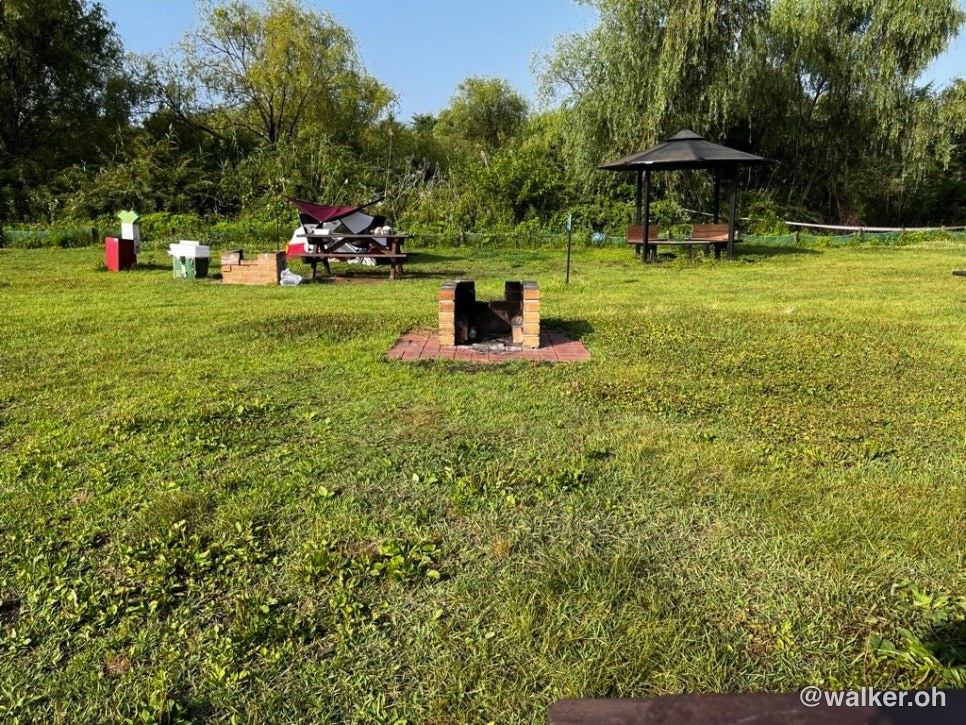
I cleared away every trace, like no one had ever been there, and sorted all the trash for recycling.
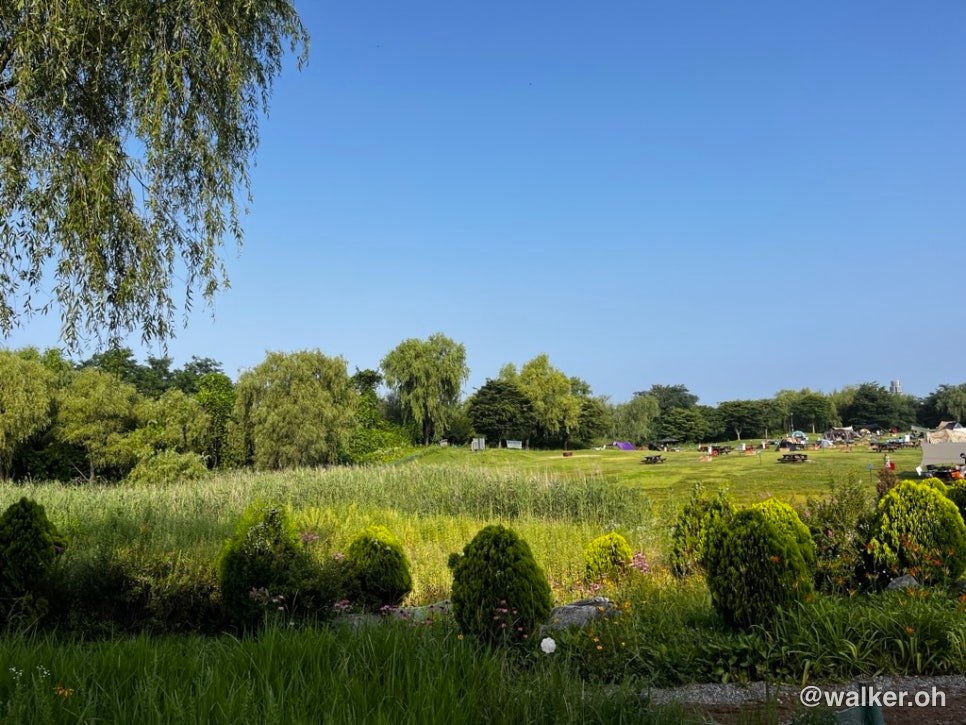
I’d bought a round-trip ticket for the shuttle cart, but coming back down went faster on foot, so I just trudged down on my own. Next time I’ll either buy a one-way ticket or try walking up instead.
It’s a campground run by the City of Seoul, and the parking lots all charge fees — but the fee system has a bit of a problem. My car, a Tesla Model Y, is classified as an electric, eco-friendly vehicle, so it qualifies for a 50% discount on public parking fees. But when I went to leave before 9 a.m., the barrier was just up, the fee wasn’t discounted, and payment wouldn’t go through, so I just drove out. I suppose a bill will come later and I’ll have to pay with the eco-vehicle discount applied — but these days other public lots apply the discount automatically, so I don’t really get why this one didn’t. Anyway, I put the inconvenience behind me and packed up just fine.
Mosquitoes aside, it was a genuinely fun trip.
Thanks for reading.
#NoeulCampingGround #KolonAerolite2 #HillebergNallo2 #Backpacking #Koalma #Kovea #MinimalistCamping
Contact: bumseok.view [at] gmail [dot] com

Comments