Tarptent Moment DW Li: My Ultralight Dyneema Tent for Backpacking Again
Camping · Published 6/8/2023 ·

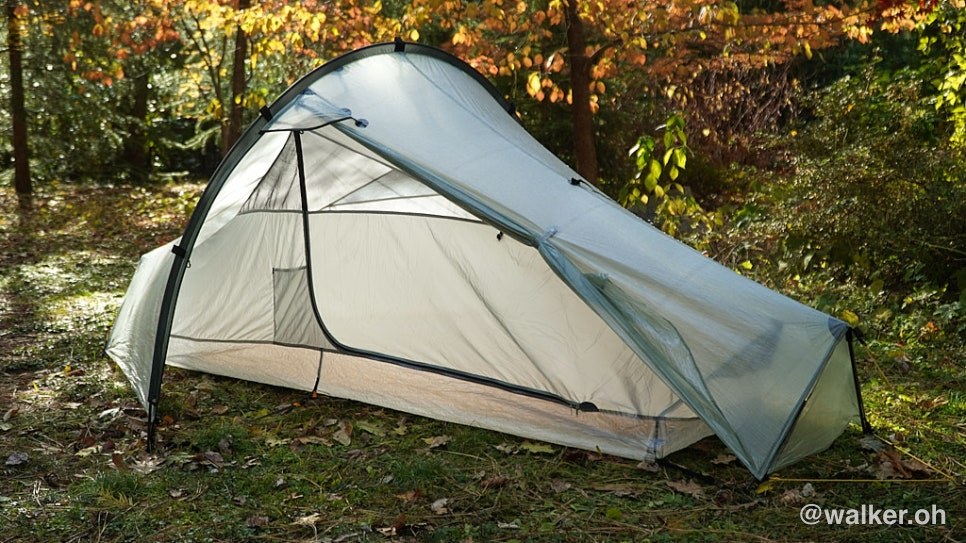
I need a lightweight tent.
Up until now I’ve done my backpacking at roughly the BPL (backpacking light) level. But I’m getting older, I’ve put on weight, and my ankles and knees are all complaining at me from every direction. So I’d taken a break from backpacking and hiking for a while. Then a friend talked me into it and I discovered there’s a whole UL (Ultralight) world out there.
There was a time when a backpacking tent under 2kg was considered light. For a two-person tent, anything under 3kg made you go, “Wow, that’s light.”
But the world keeps moving, and that progress shows up in the products. With new materials going into tents, there are now plenty of seriously lightweight options out there.
The prices, of course, are not nearly as pretty.
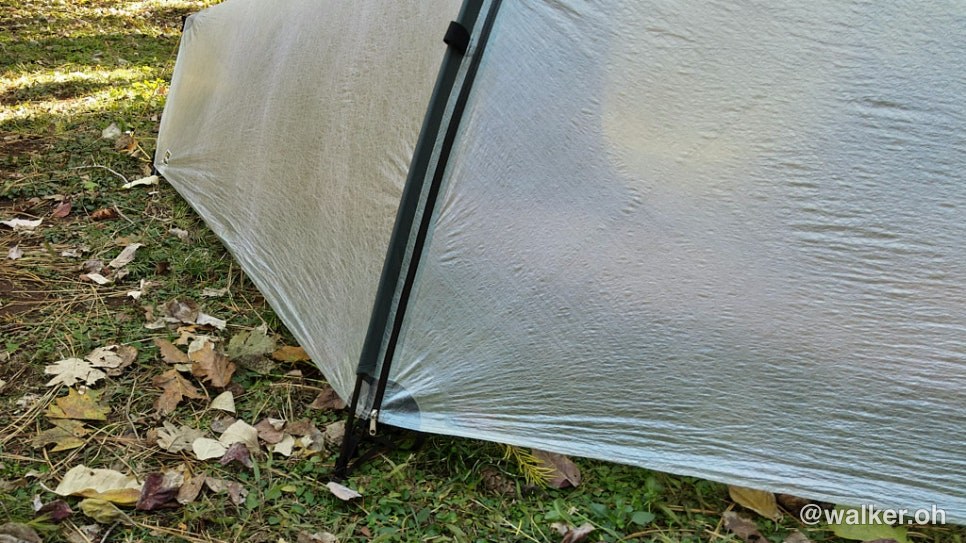
The source of all that lightness is the material of the tent skin. It feels almost like plastic sheeting to the touch, but apparently it’s strong and durable.
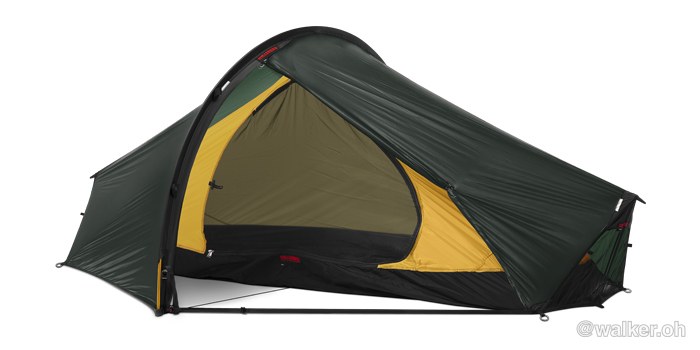
This is a Dyneema tent. It uses a single pole — a “greenhouse” style tent, otherwise known as a dog house.
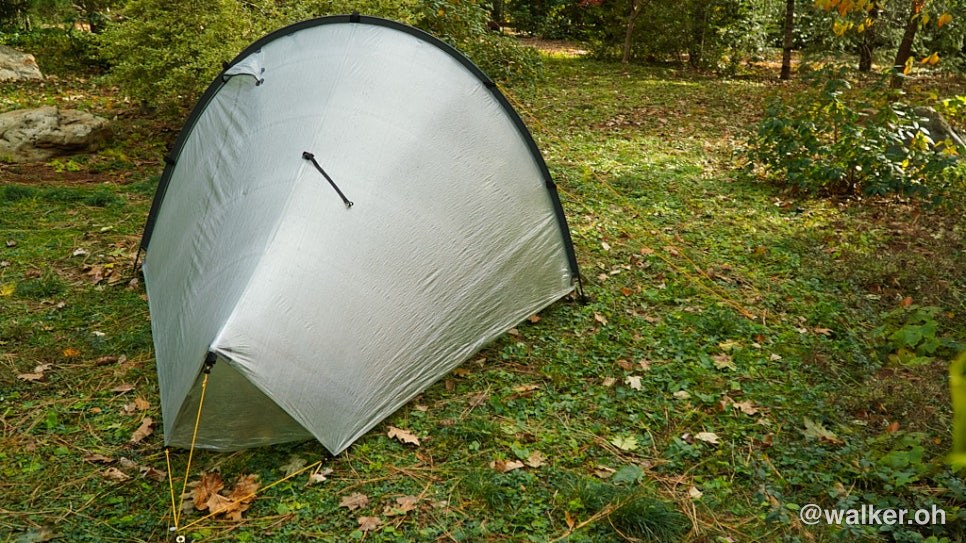
You stake it down once on each side, insert the carbon pole, and it stands on its own. In bad weather, the time and method for pitching a tent need to be simple so you can keep your body heat up. So a tent should be simple.
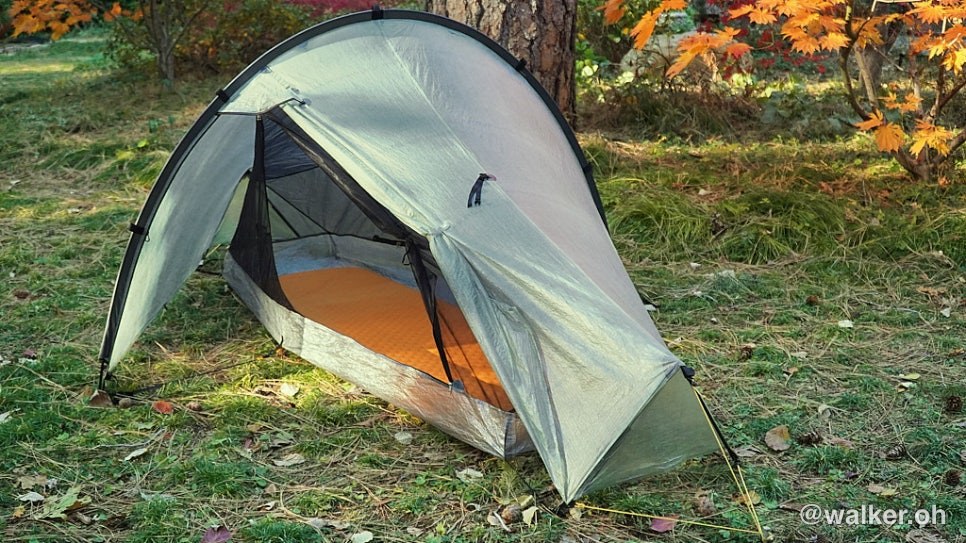
It gives you a vestibule on one side. A tent with a vestibule is really versatile. You can stash your hiking boots and pack there, and when it’s raining you can even have a quick meal in the vestibule. For the inner tent, I went with the mesh version. I won’t be heading out in the dead of winter, but since I’ll mainly use it in summer, mesh has the edge.
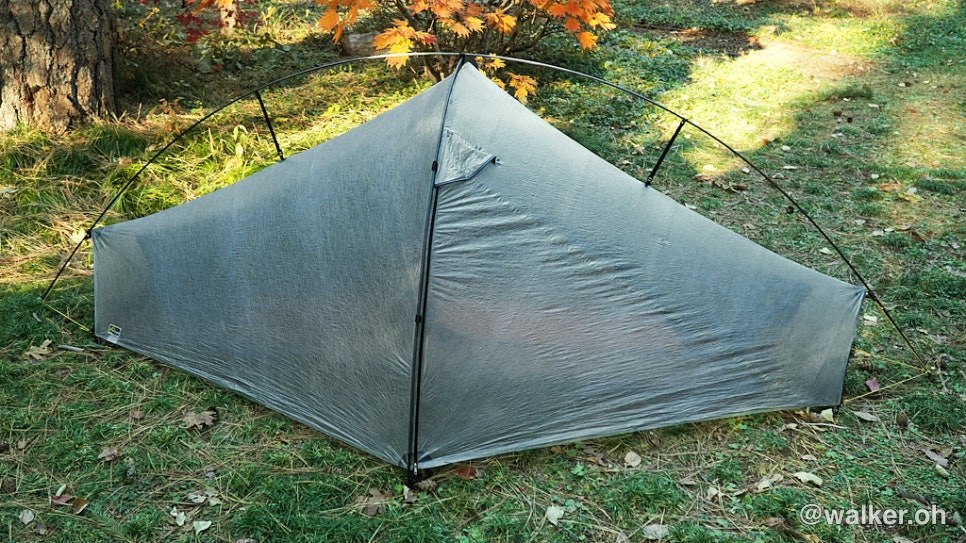
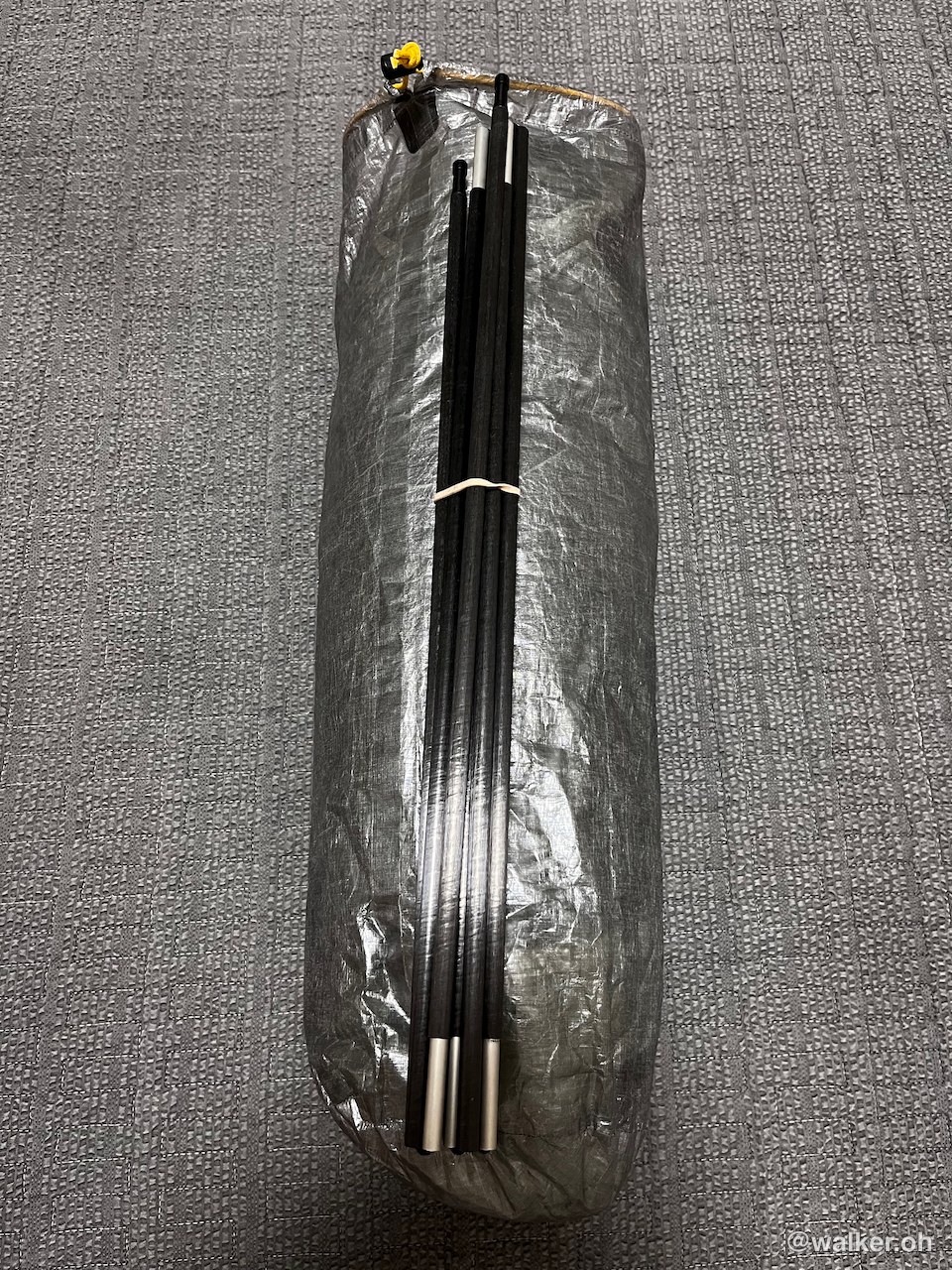
If you order an extra pole, it becomes a fully freestanding tent, but I didn’t buy the extra pole. My main goal is to shave off every gram I can, so wherever possible I’m aiming for the smallest volume and weight.
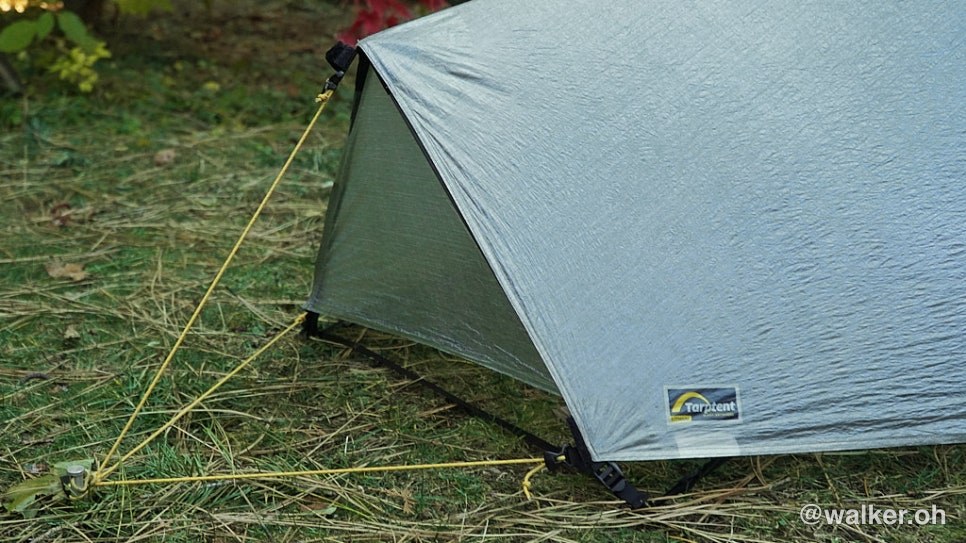
It uses a structure where the triangular strings are all gathered and held at one point, which I think is a really good design. Hilleberg’s Akto needs two or three stake-downs, but the Enan was changed to just one — same line of thinking.
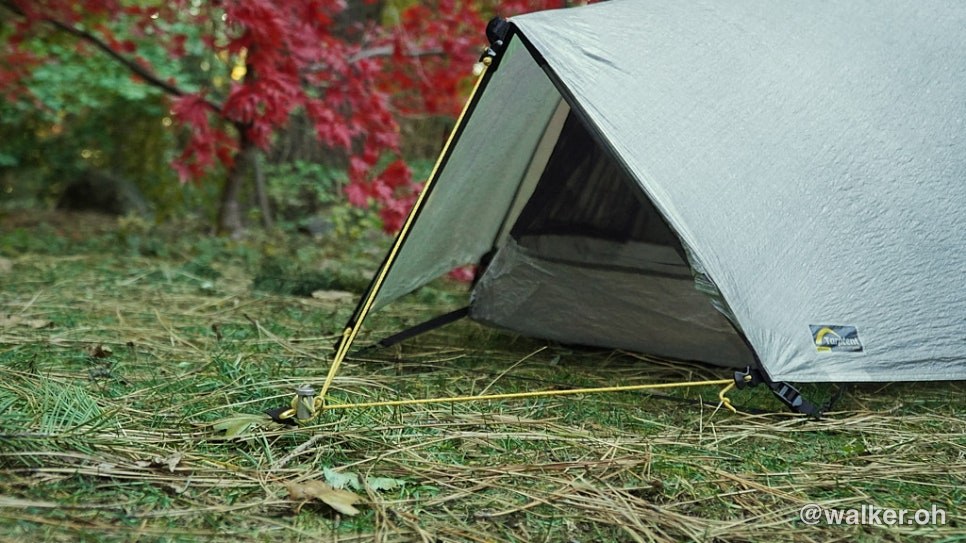
It has a ventilation system at the head and foot ends. Ventilation is hugely important in a tent. The large amount of water vapor your breathing produces eventually runs down the tent skin and soaks your gear, or in winter falls as snow and wakes you out of a good sleep. The best way to prevent condensation is to open the door, and a tent that ventilates front-to-back tends to air out well regardless of wind direction. When temperatures climb, it’s also a key feature for cooling things down.
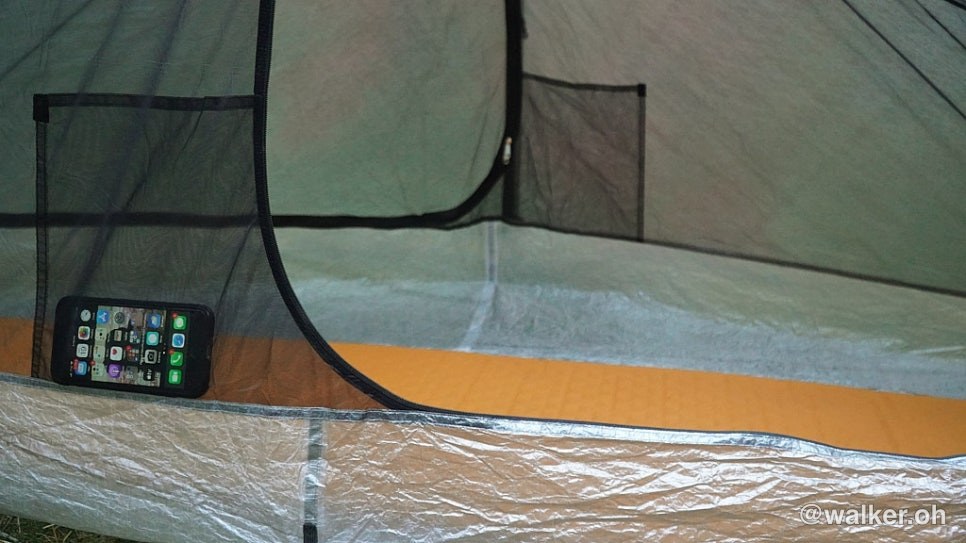
The inner tent is built from a bathtub-floor structure of that plastic-sheet-like Dyneema fabric, topped with mesh. They’ve also added storage pockets on both sides. Keeping your phone, socks, and other odds and ends in one spot massively cuts down the time spent hunting for your stuff when you pack up the next morning.
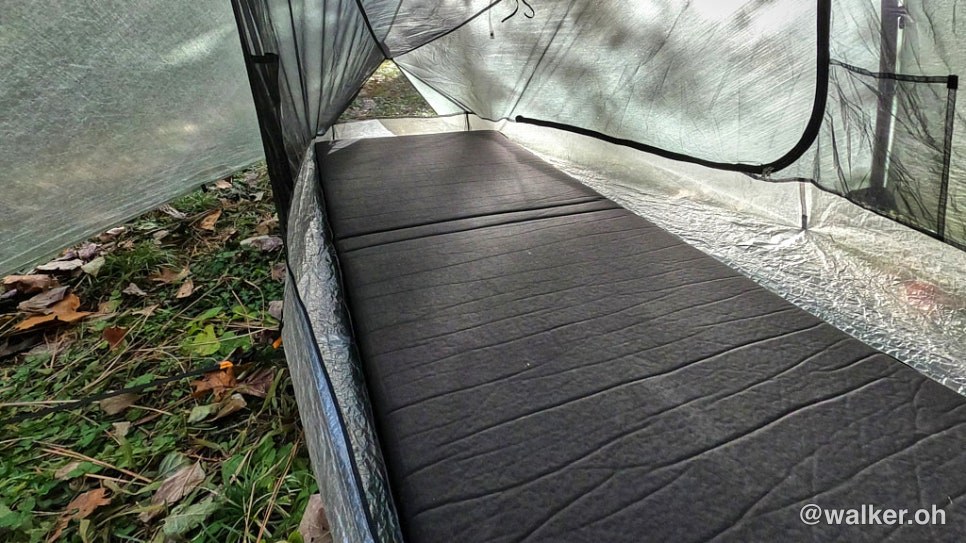
Even with a single-person air mattress laid out, there’s space left over on the right. It’s the perfect spot for stashing a pack and other gear. In winter, I think it’d be a good place to toss something like a mitt.
I’m getting ready to backpack again. It really was such a wonderful hobby, and now that my health has recovered to some degree, I plan to prepare even more thoroughly — lighter and safer — and enjoy it.
Thank you.
Detailed specs
General
-
-
Sleeps: 1
-
Seasons: 3-4
-
Weight: 26.25 oz / 745 g (with carbon arch pole, solid interior, stakes, struts and bags)
-
-
Moment DW Li fly, corded with struts : 12.2 oz / 346 g
-
Carbon arch pole (7mm): 3.7 oz / 105 g
-
Aluminum arch pole (9mm): 6.9 oz / 196 g
-
Moment DW Li solid interior : 8.8 oz / 250 g
-
Moment DW Li mesh interior : 9.15 oz / 260 g
-
Stuffsack: 0.5 oz / 14 g
-
Stakes in stakebag: 1.05 oz / 30 g
-
Optional carbon crossing pole (7mm): 5 oz / 145 g
-
Note: Full tent weight includes stakes, guylines, struts, stuffsacks, and arch pole.
-
Dimensions
-
-
Interior Height: 39 in / 99 cm
-
Floor Width: 20 – 42 in / 51 – 107 cm
-
Floor Length: 84 in / 213 cm
-
Packed size: 18 in x 4 in / 46 cm x 10 cm
-
Image source: Tarptent website
#Dyneema #Tarptent #MomentLi #UltralightTent #BackpackingTent #MinimalCamping
Contact: bumseok.view [at] gmail [dot] com
Comments