Kolon Aerolight 2 Unboxing: A 1.7kg Freestanding Tent Review
Camping · Published 6/21/2023 ·
Currently I own a Moment Li DW — a non-freestanding, ultralight tent made of Dyneema. It weighs in at around 700 grams on my own scale, which makes it a genuinely featherweight tent. It’s a lightweight piece that barely outweighs a decent cookset, and I’ve been really happy with it. Backpacking tents fall broadly into two camps. Is it freestanding, or is it non-freestanding? A freestanding tent, just as the name says, holds its own shape without help from stakes or any other structure. If you pitch it and don’t like where it ended up, you can just pick it up and move it around, and you can set it up and use it in rock crevices or other genuinely harsh spots.
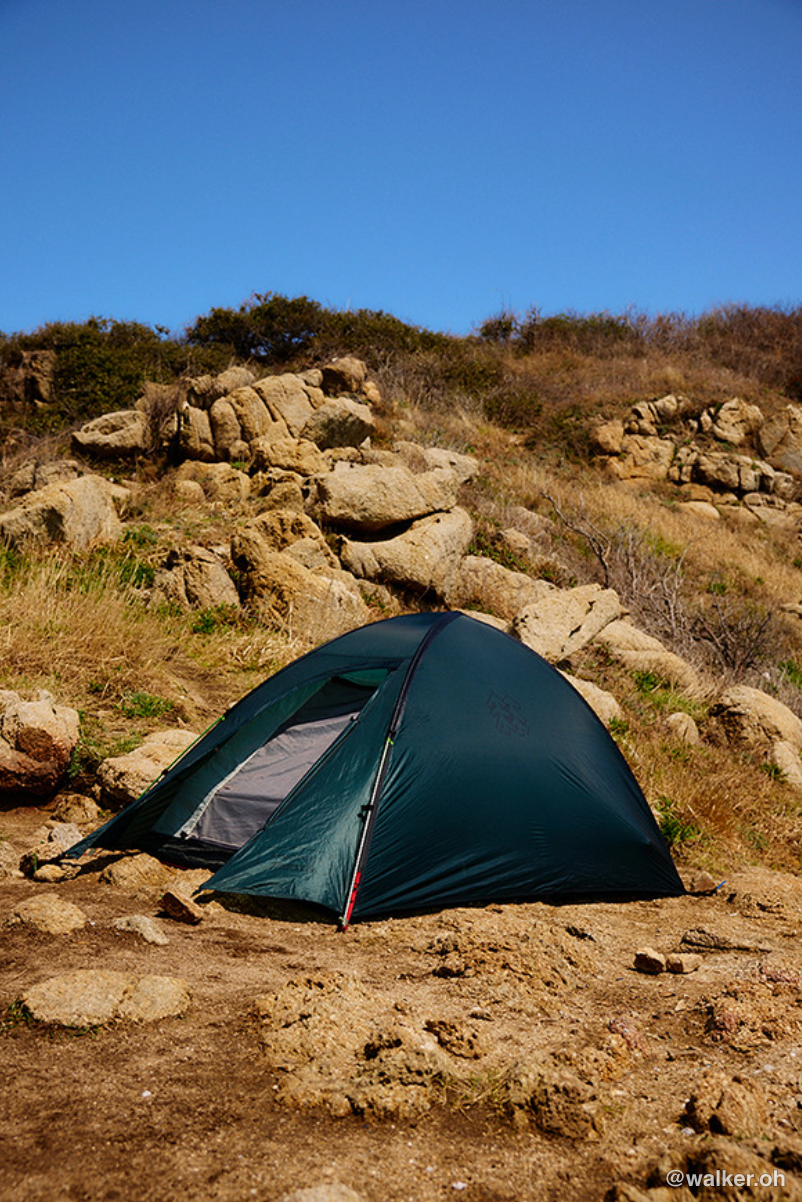
As you can see in the photo above, even in a spot where staking down doesn’t really work, you can still pitch it first and then hold the stakes down with rocks. I bought the tent above because I wanted to use a freestanding tent.
Specs
140/120 (front/back) x 265 x 116(h) cm
Inner tent — 130/110 (front/back) x 210 x 105(h) cm
Packed size — 42 x Φ16.5 cm
Minimum weight: 1.51 kg / Total weight — 1.74 kg
Included — tent, 2 main poles, 13 lightweight stakes,
4 strings, storage case
The specs say the total weight is in the 1.7 kg range, but once you add the footprint it ends up around 2 kg. After shedding a few unnecessary stakes, I could just barely get it down to 1.7 kg. As for why that is, let me take a closer look…
The fly and inner tent are joined together, much like Hilleberg tents. It also includes a mesh window and a rear vent. And the material plays a part too. It uses fabric that’s thicker than you’d expect, and seam tape is applied along all the stitching. That bumps up durability and waterproofing, but it’s also the reason the weight keeps creeping up. Still, a double-wall tent with a single door has a clear purpose. It’s very well suited for bitter cold, or for three-season use from autumn through early spring. Some people ask how warm one or two layers of fabric could possibly be, but just by managing condensation and ventilation while reducing the wind’s impact, the interior temperature holds up remarkably well. It also has a vestibule that you can use, at least a little, even in heavy rain. You can stash your boots and backpack there, and if you’re solo there’s plenty of room to eat a packed meal.
I’d been wanting to try a domestic tent too.
Most of the gear in Korea’s backpacking market is imported. It’s not as if this country can’t make a proper product… The reason companies don’t make them is probably that the market is small and there’s no money in it, right..? They’d have to invest in R&D, but the return on that investment is likely to be pretty negligible. Still, I’ve always been thirsty for one. The advantages of buying domestic are honestly beyond counting… When you factor in how warranty issues get handled and the time and cost involved, if something is domestic and good quality, there’s really no reason not to use it. Sadly, my car and computer are imports, but I’ll always be rooting for domestic products that can replace them.
In the past I used to enjoy camping with Hilleberg tents. Time passed, the lightweight trend blew in, and these days there’s even the term “UL,” with sub-1-kilogram tents and gear everywhere. One of the reasons I loved using Hilleberg tents is their tough durability. They’re also easy to pitch and take down. On the maintenance side, though, they can be a bit of a hassle. When the gear gets soaked by rain it becomes a real mess and you have to spend a good while drying it out — that’s when it’s a non-freestanding tent, I mean. With a freestanding tent, even if you break camp while it’s wet, you can set it back up at home and dry it indoors and it dries in no time, so on the maintenance front freestanding tents do have a few advantages.
That’s the welcome Kolon tree logo. It’s kind of like driving an imported car for about 20 years and then settling into a high-end domestic sedan… I paid for it with my own money, but it still feels incredibly welcome.
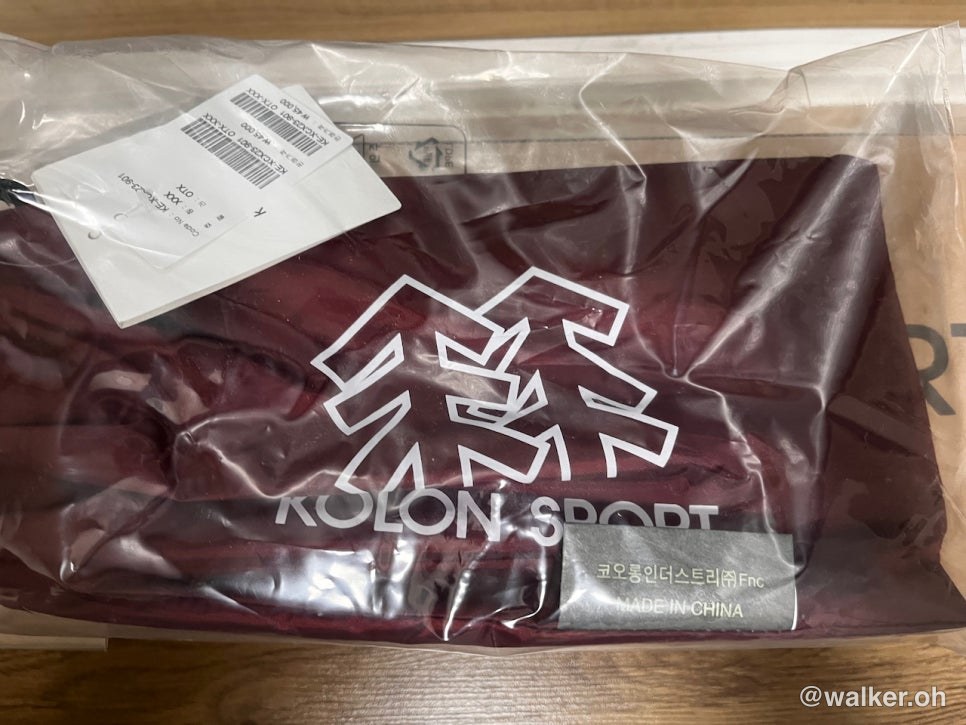
There’s even Korean on it lol It was made in China, though.
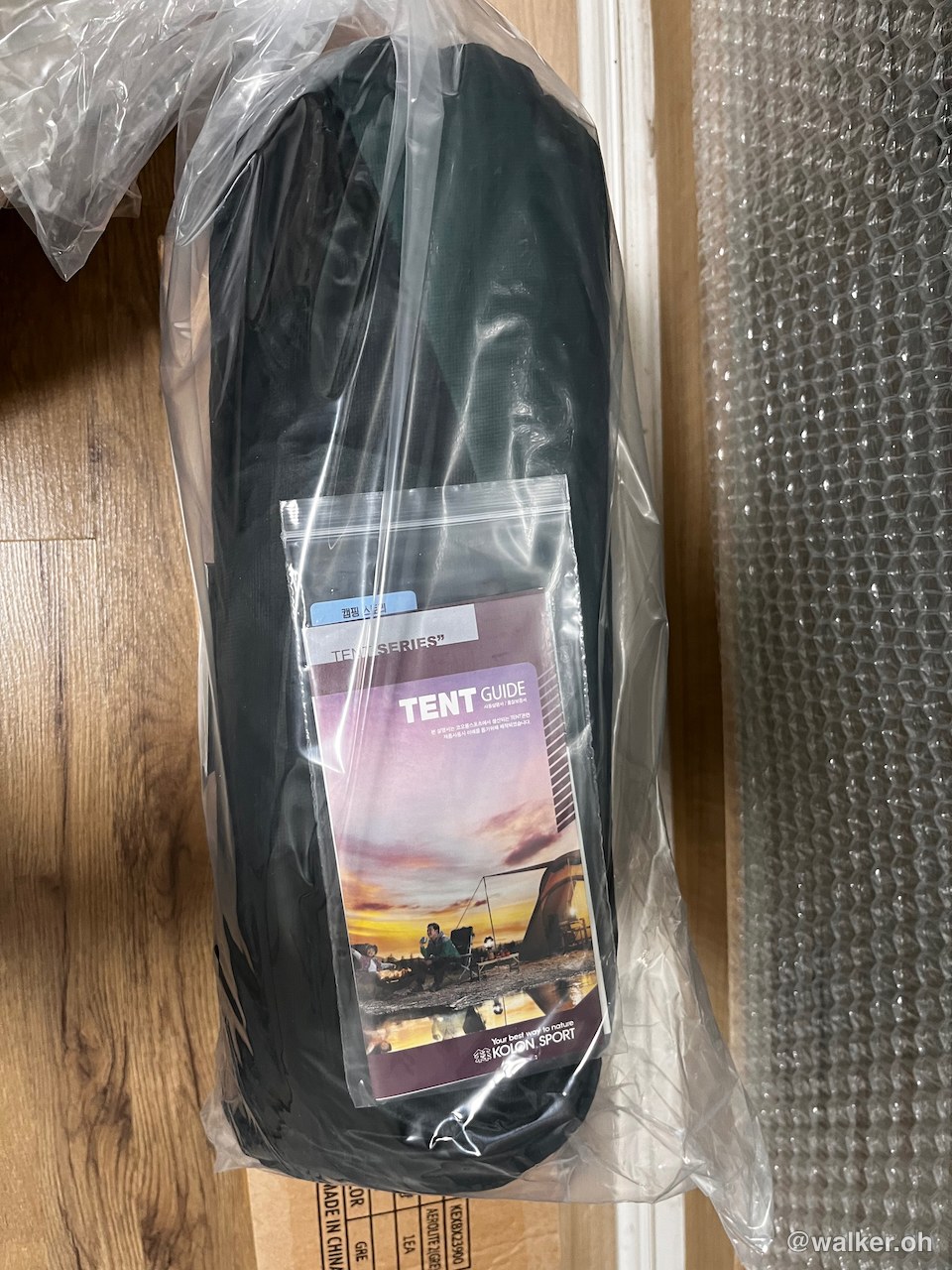
The manual is in Korean too, of course… It’s not that I can’t read English, but there’s just no helping the fact that Korean is more comfortable.
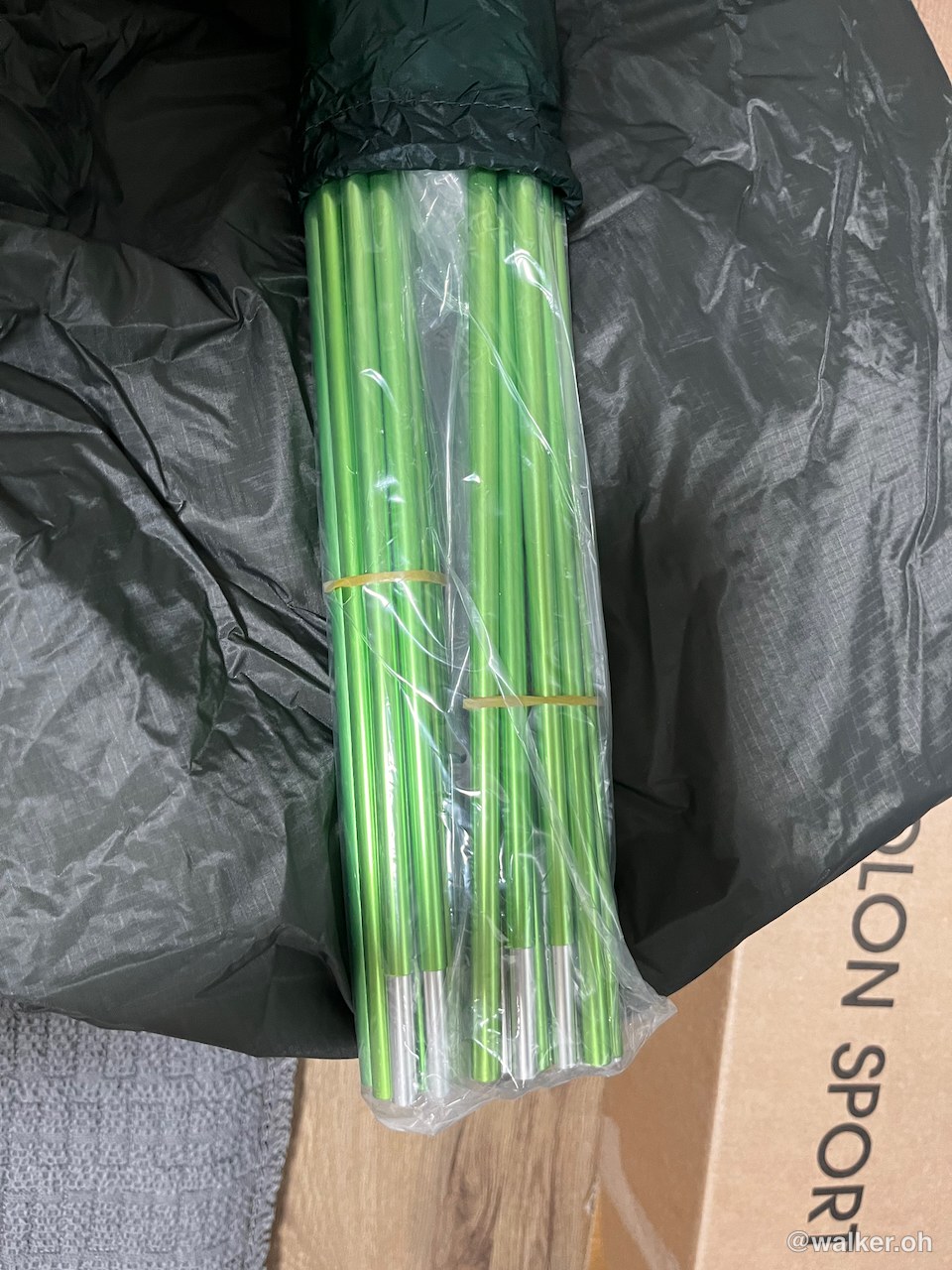
It’s a limited edition of sorts, and since the concept is green, the pole color leans that way too. But I sort of wish they’d either matched everything or gone with a fully contrasting color scheme — it feels a little half-baked, doesn’t it? It’s awkward.
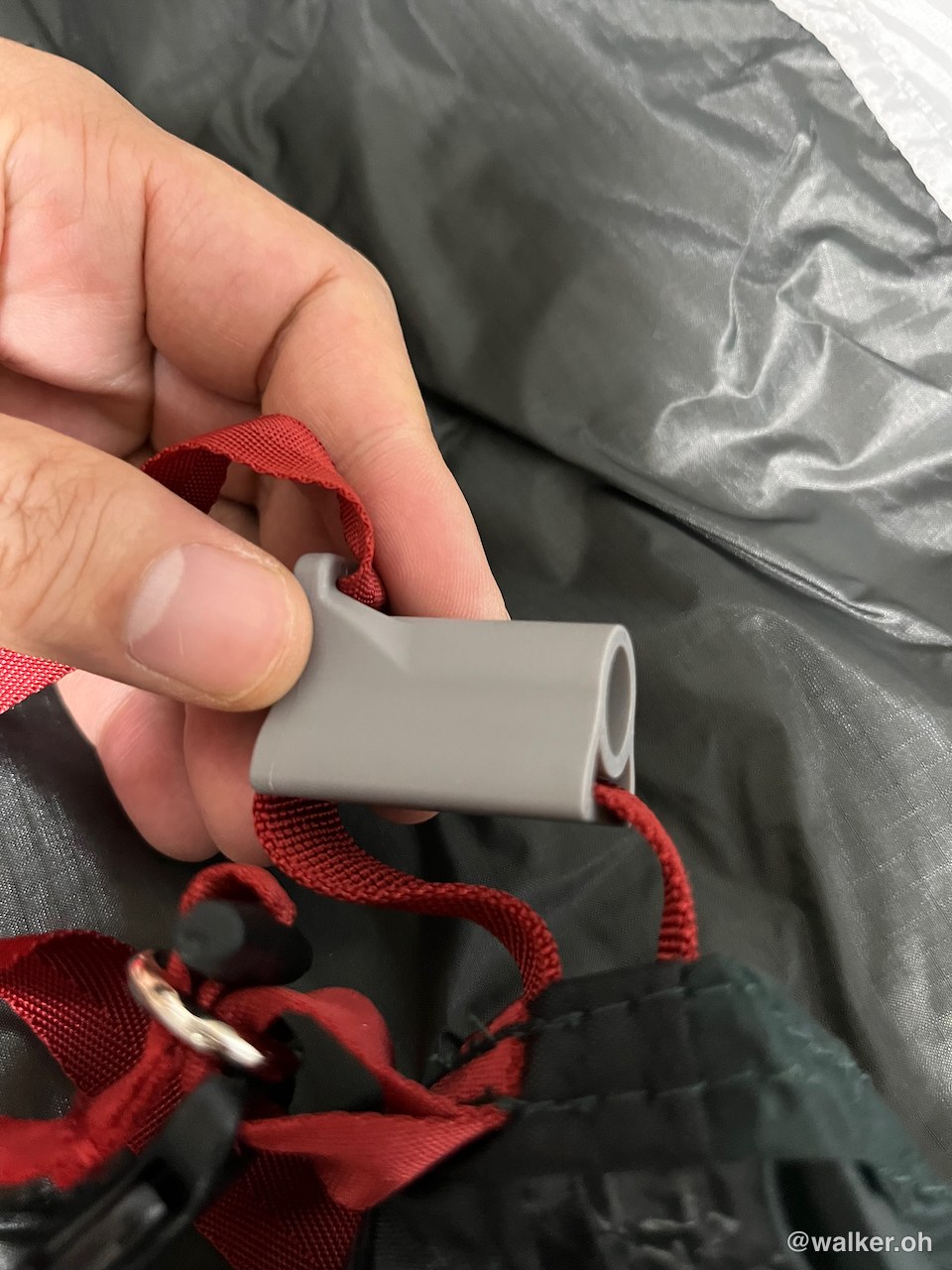
This is the pole cup. I hope it holds up well without cracking in winter.
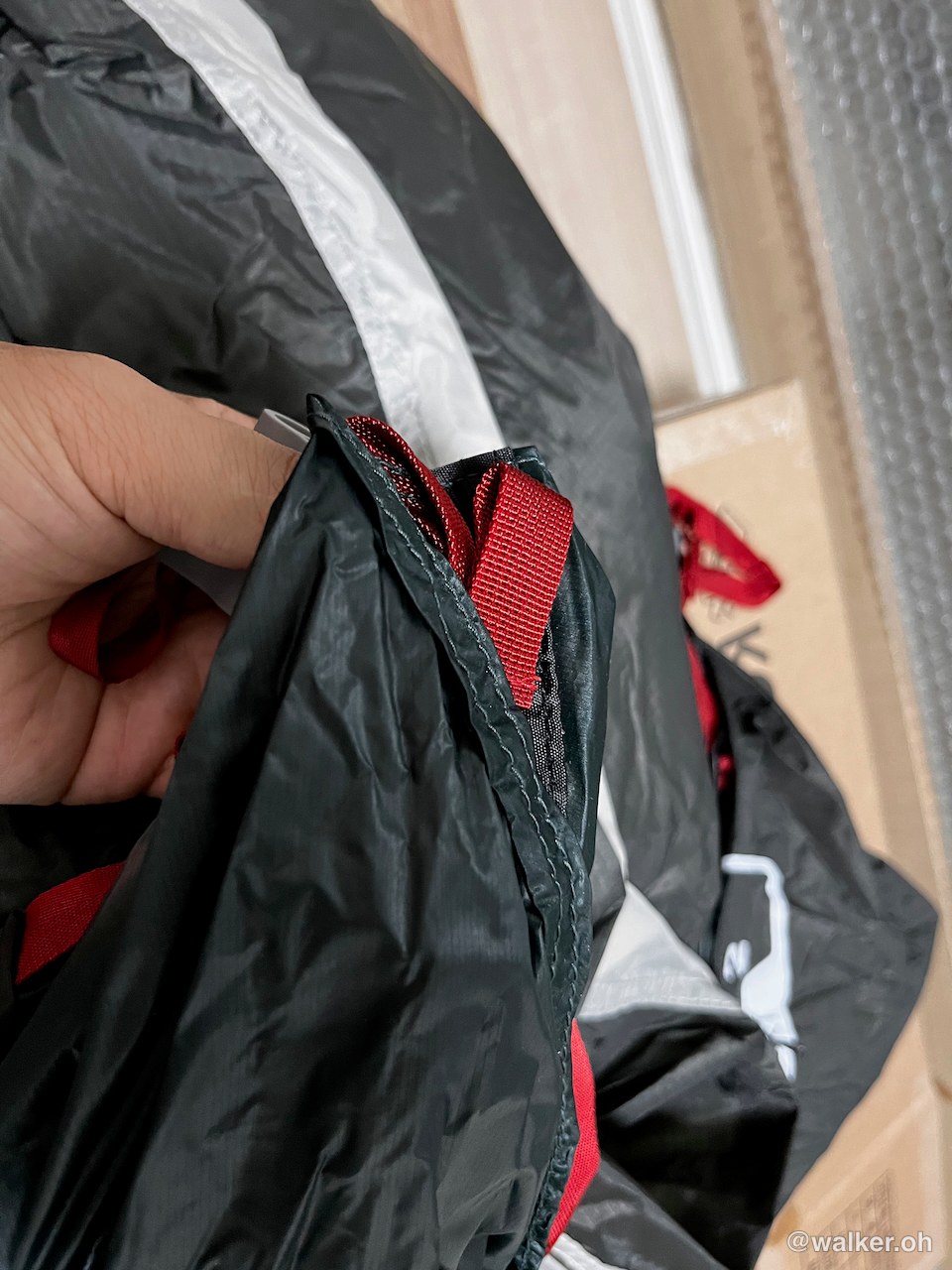
The material on the fix points here and there is a bit over-spec’d. I kind of wish they’d dialed it down a touch for the sake of weight, but that part’s probably good for durability.
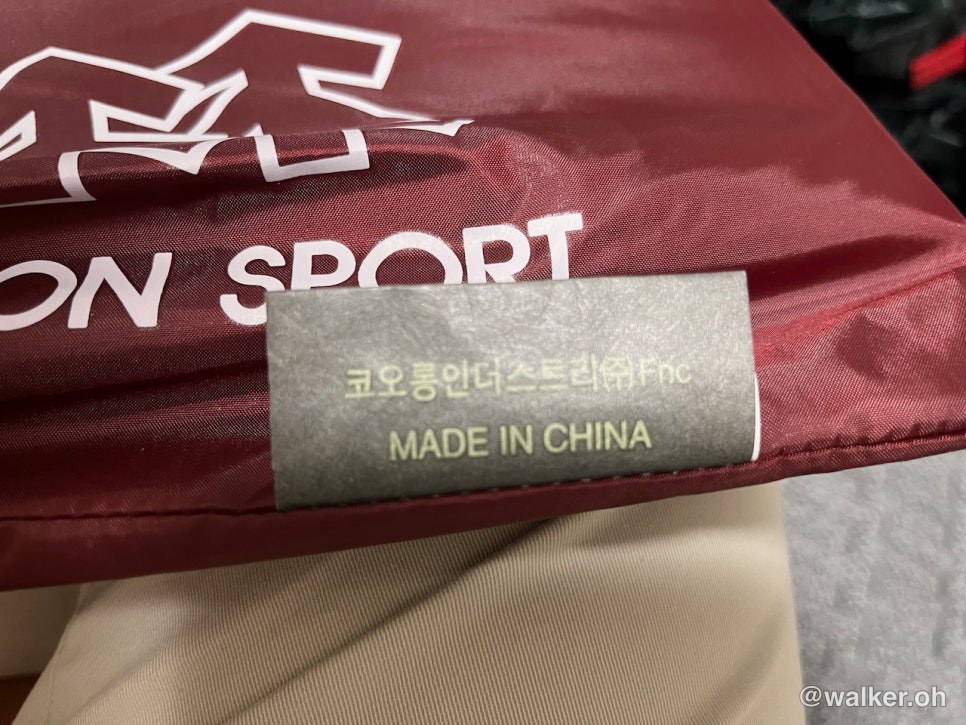
This is the footprint cover. Just peeling off the tent cover and footprint cover alone cuts the weight quite a bit.
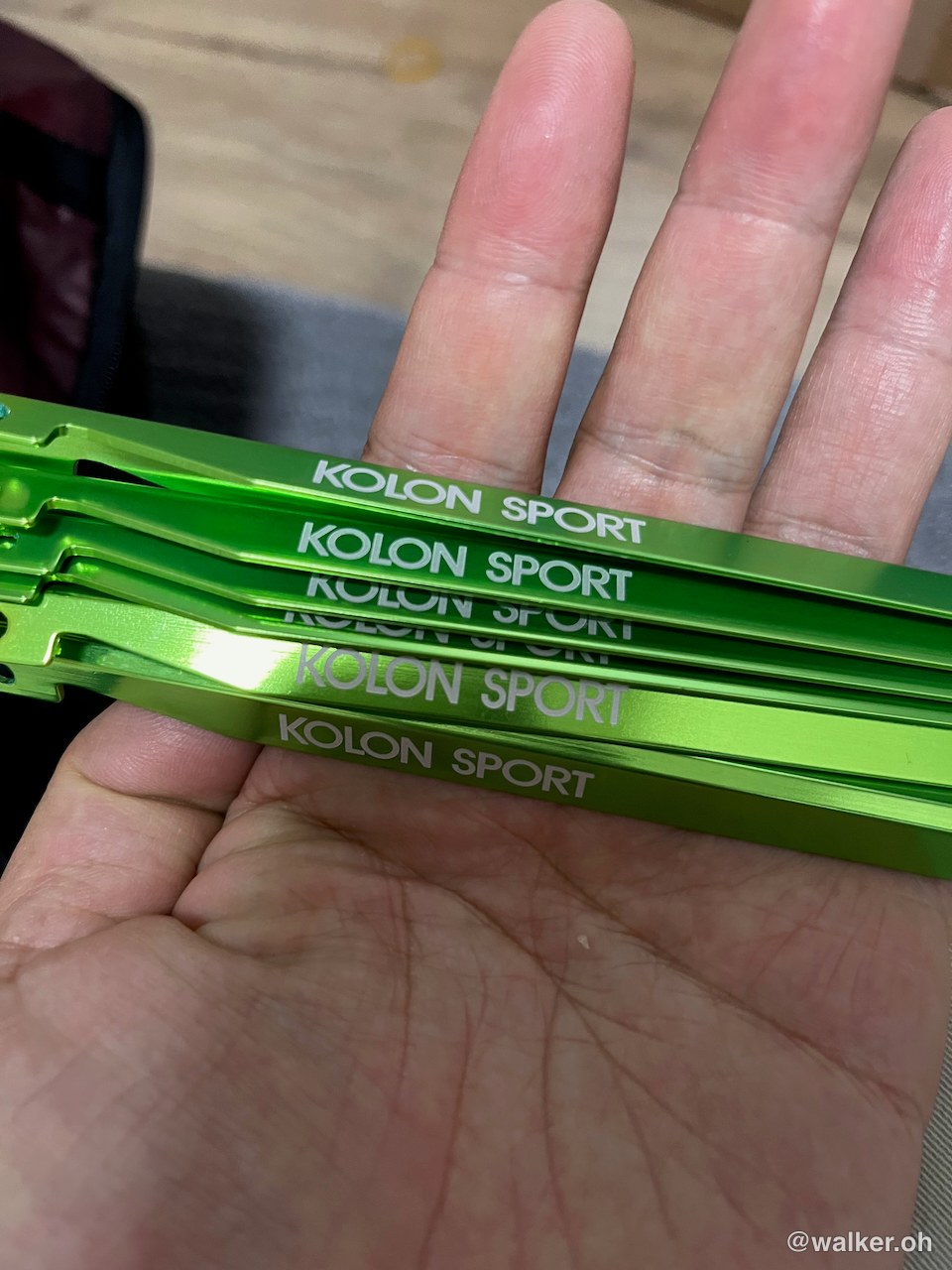
The stakes are nice and green too. They didn’t include strings on the stakes. Given the price of the tent, I get it. But wait, no pull strings on the stakes either? lol Whoever was in charge of the product contents seems to have lost their mind. If you’re going to punch a hole, you should’ve included the pull strings… It’s details like this that are really disappointing… After going to all the trouble of making a good product, why make the buyer spend more time and money over strings that cost less than a few hundred won? …
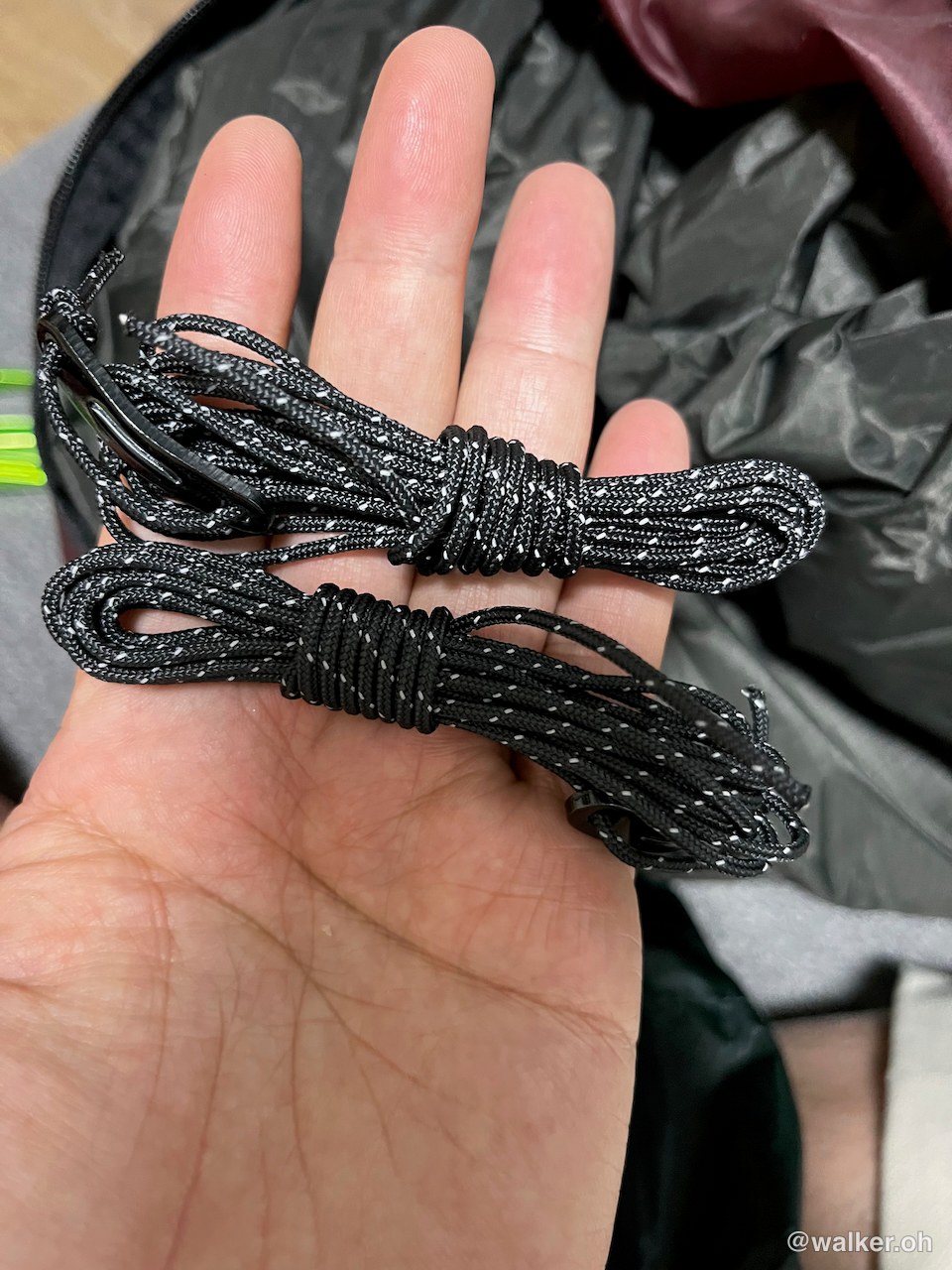
The guylines that tie to the tent are included, just not pre-attached. I can understand cost-cutting to the point of not pre-attaching them.
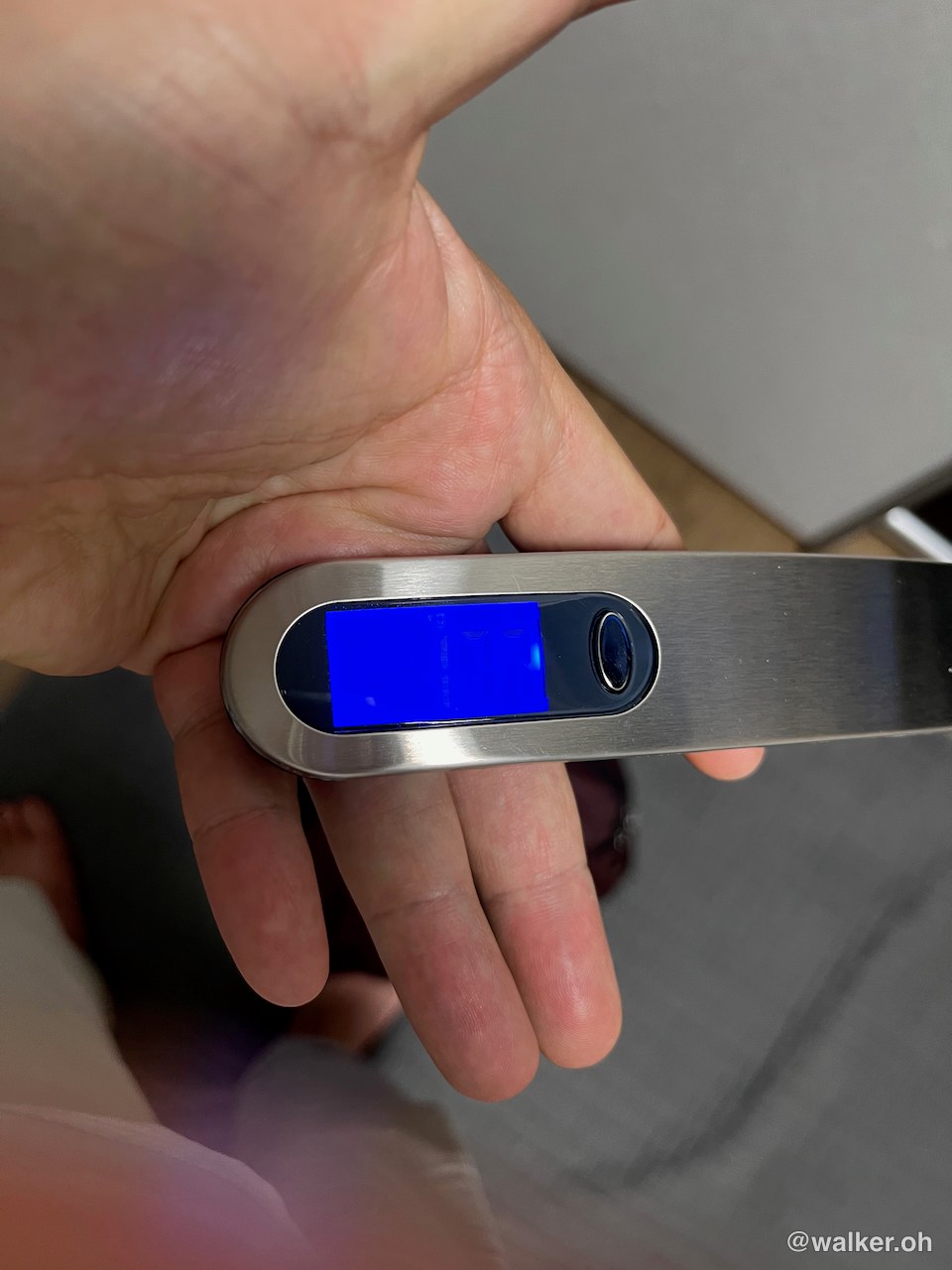
The weight on the scale is hard to make out, but it’s 1.77. That’s with 6 stakes, the tent pouch, and the ground sheet pouch removed, and with the pole pouch, the body, and the ground sheet stuffed into a very light 20-gram tent dirt bag before weighing. It’s a bit off from the weight the manufacturer claims, but for a double-wall, freestanding tent that sleeps two, it really is light.
I get the feeling they did a great job and then left the finishing touches half-done. It was packed well and shipped, and nothing was missing from the contents. And it costs about half the price of a Hilleberg tent… But Hilleberg tents are sold in a state where, once you buy one, you can just use it with nothing left to tinker with. They’re so over-spec’d that people actually end up stripping off some guylines to lighten them or packing fewer stakes.
So now I’ve got to go digging through various shopping apps to buy guylines again…?? This was an unboxing review that got me thinking once more about exactly what kind of details you need to compete in the global market.
Thank you.
#Kolon #AeroLight2 #BackpackingTent #FreestandingTent #AggressiveTent #BoughtItMyself #DomesticBackpackingTent
Contact: bumseok.view [at] gmail [dot] com

Comments