Camping Gear Care: My Post-Trip Routine to Make Equipment Last
Camping · Published 6/20/2023 ·
It’s properly hot summer now — peak camping season. Lots of folks head out to enjoy nature with their hearts full of excitement. But if you don’t take care of your gear, that expensive, hard-to-find camping equipment falls apart in no time. So today I want to talk about taking care of camping gear.
I used to be pretty careless myself — sometimes I wouldn’t even pull things out of the trunk, leaving them in there for over a month. There was even a time I packed up after rain, couldn’t figure out what to do while it was still drizzling, and just left everything as-is. These days I’ve got a routine down, and I’d like to share it.
First, the cookware and dishes you used to make all that delicious food — you’ve surely done your best to wash them at the campsite or bivy spot. But take a whiff of your gear bag or backpack and you’ll still catch that lingering food smell. The first thing I do when I get home is wash everything again. I also detach the gas canister I used and store it somewhere with good airflow — in an apartment, I prefer leaving the window open on the north-facing veranda. With cookware, same-day cleaning really feels essential.
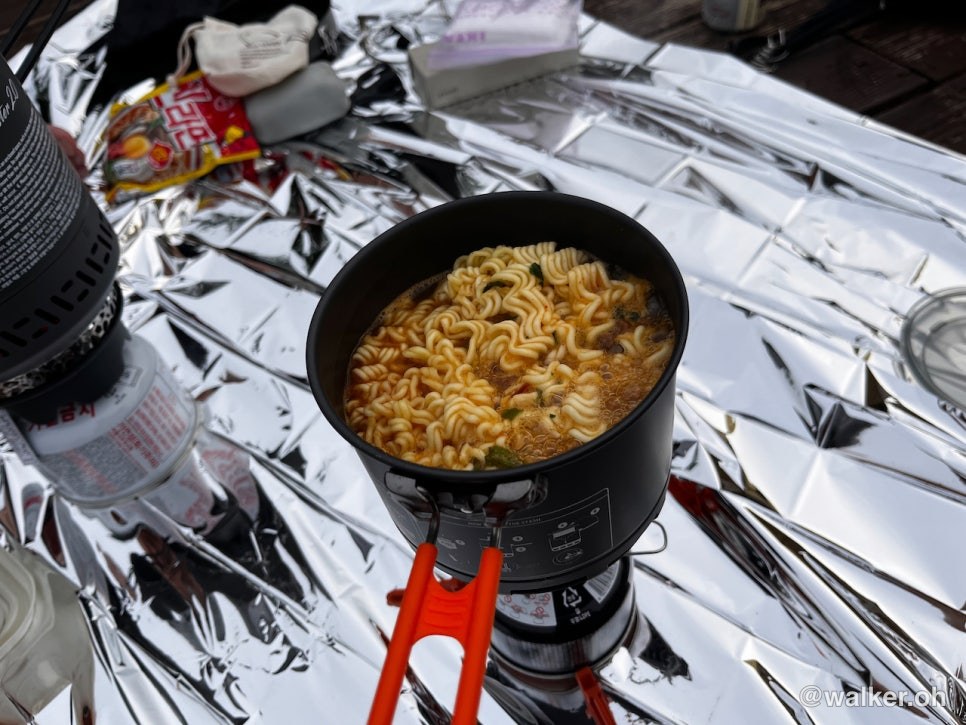
Ramen… great while you’re eating it, but that smell really sticks around ^^
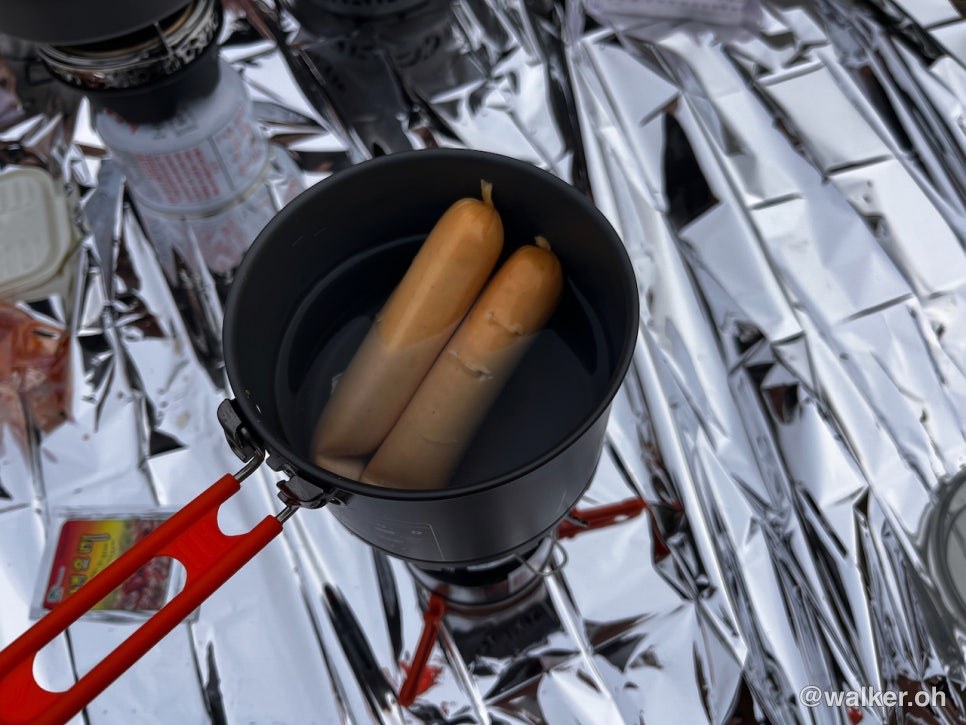
This trip I heated up some chicken breast sausages in a hot water bath.
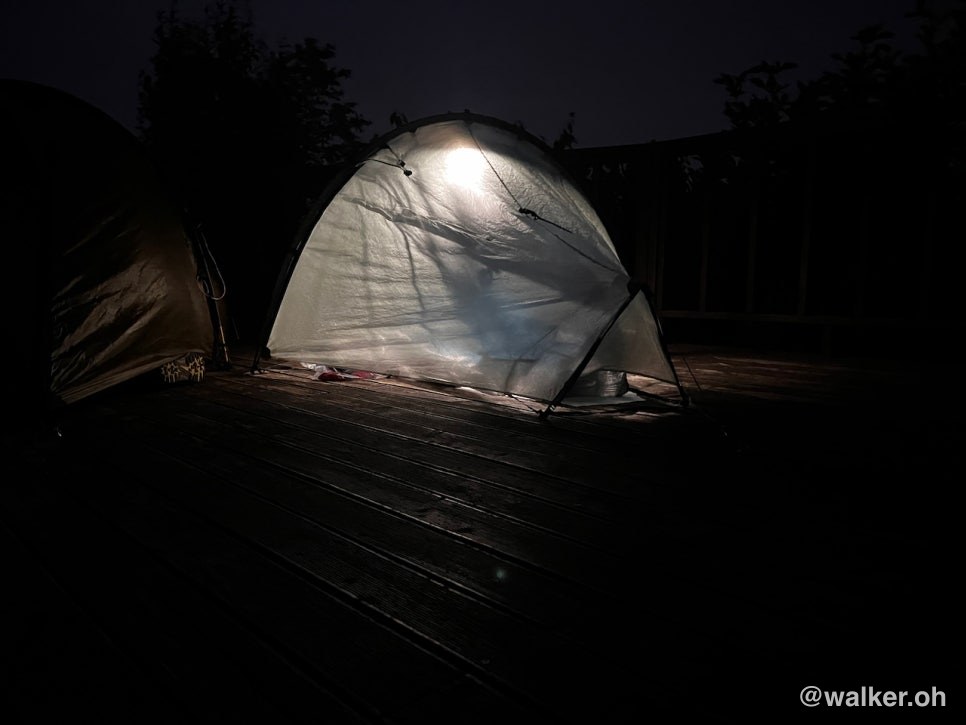
Now for the tent. Even when it doesn’t rain, the tent gets wet. The moisture from your own breath dampens it, and that moisture can turn into condensation. Dew also settles in the early morning. It’s not easy to get it fully dried out at the campsite or bivy spot.
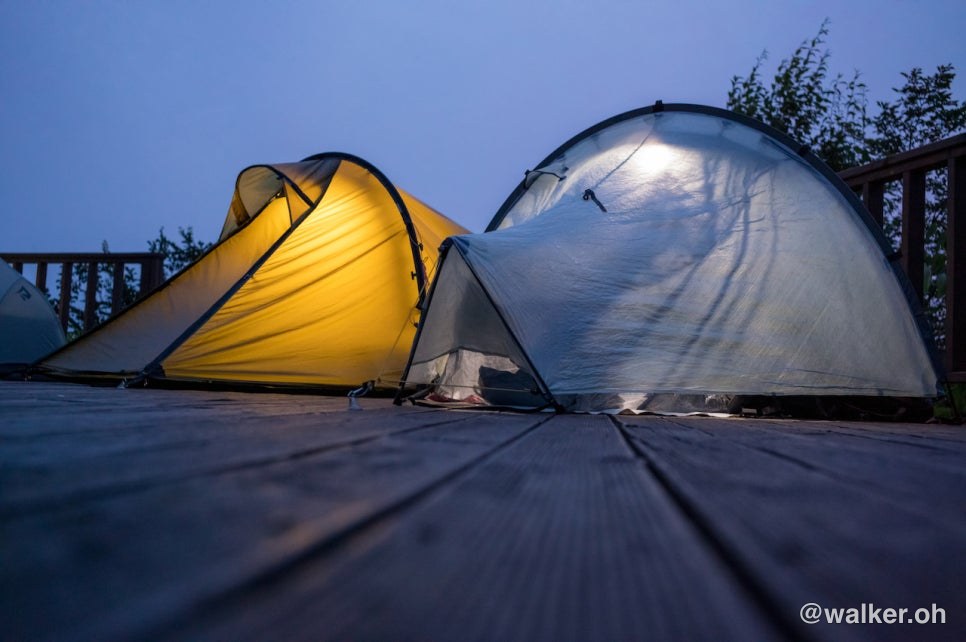
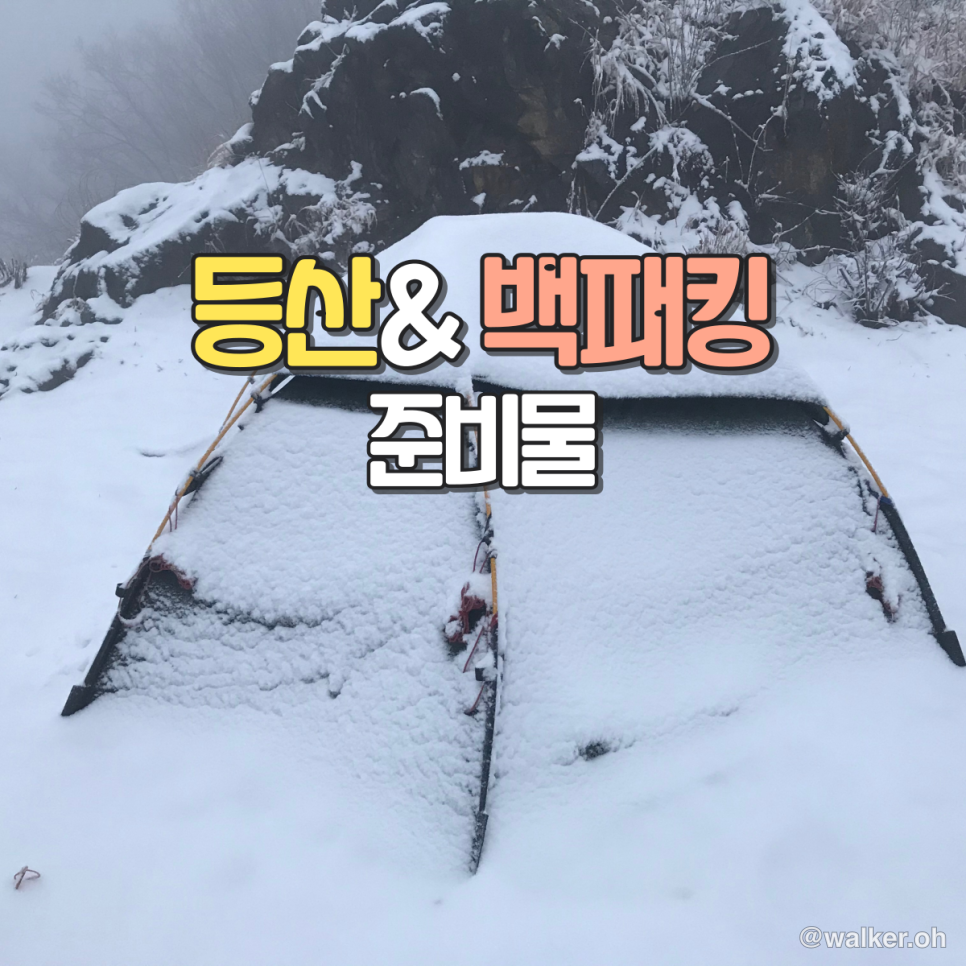
If you don’t dry it well, you might just get a taste of that army-supply-depot smell. With a freestanding tent, it’s nice to set it up again at home and air it out to dry — but the non-freestanding tent in the photo above, or those big cabin-style tents, can be a real pain to dry. Here’s the method I use.
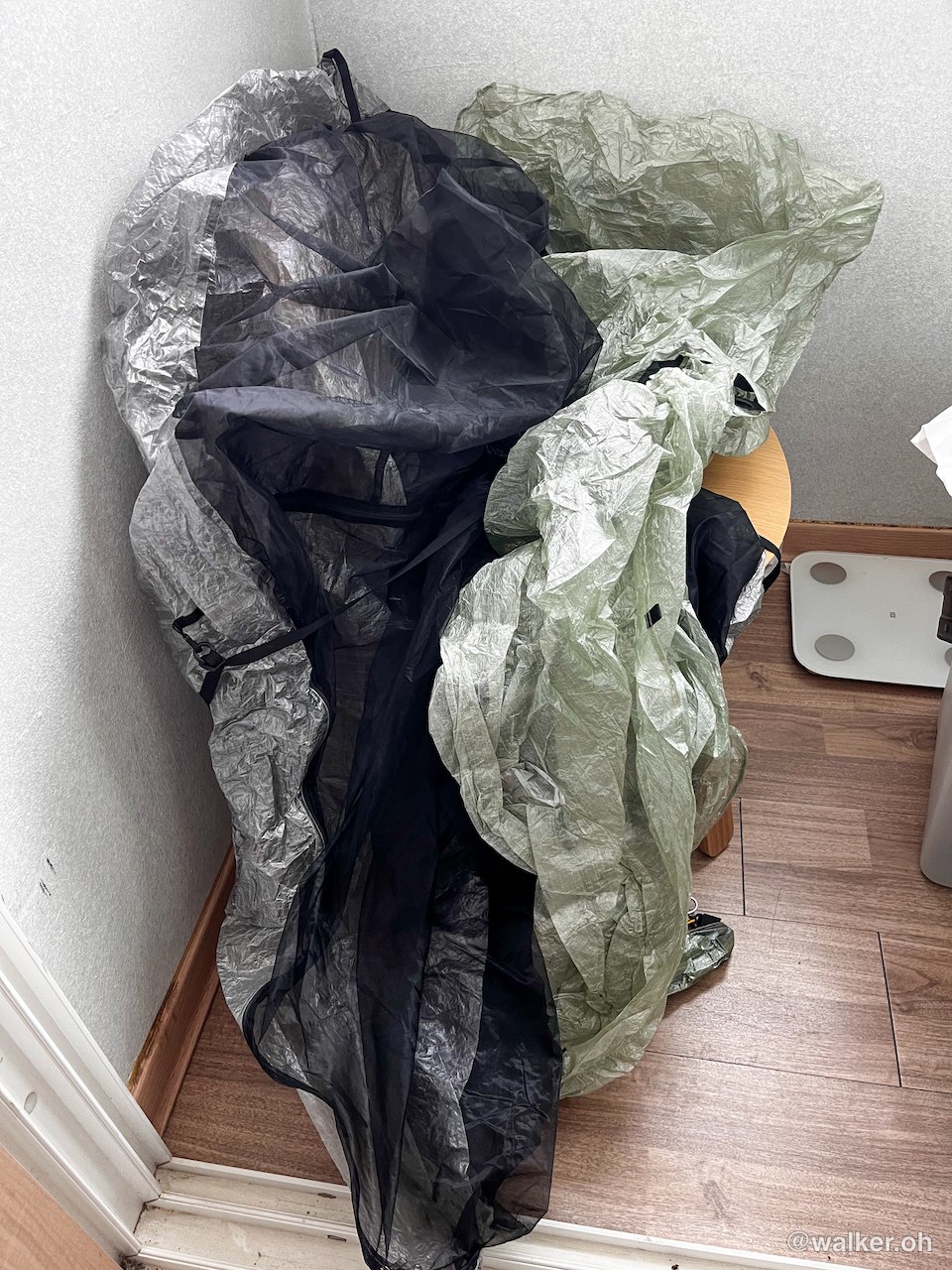
First I flip the tent inside out, set a chair on the veranda, and drape it over. Then I run an air circulator for 2-3 hours and open the window. You don’t even need to spread the tent out evenly — moisture moves from wherever it is toward the drier air, so honestly I just loosely shake it out, then flip it over again about an hour later, and repeat. Before long it’s bone-dry and crinkles when you touch it. Dishes take a long time if you hang them with the rest of your everyday dishware, so after washing up I just shake off the excess water, hang them in the same tent-drying spot, and the power of the circulator dries them surprisingly fast.
It’s not in the photo, but right beside all that I’ve got a sleeping bag hanging too. About three hours of circulator airflow can dry a whole lot of gear. It even dries well on rainy days.
I think it’s gotten a little better now, but certain brands of camping gear still seem to be out of stock all the time. This stuff is hard to find and pricey, so if you toss it aside because you can’t be bothered, its lifespan shrinks and you’ll lose your sense of smell to the funk. As tedious as it is, just drying everything properly the moment you get home means you can use it for a really long time.
Thank you.
#CampingGearCare #BackpackingGearCare #CampingSleepingBagCare
Contact: bumseok.view [at] gmail [dot] com
Comments