잠발란 토파네 8-9년 등산화 리뷰 — 국산 vs 수입 등산화 진실
Daily · Published 1/2/2023 ·
Let me introduce the one and only pair of hiking boots I wear.
I’m someone who went through about ten different kinds of hiking boots before finally settling on Zamberlan.
My hiking “career” is fairly short — about 10 years — but I went 3-4 times a month, more than 30 times a year, so it’s been short but intense. I’ve really enjoyed the mountains.
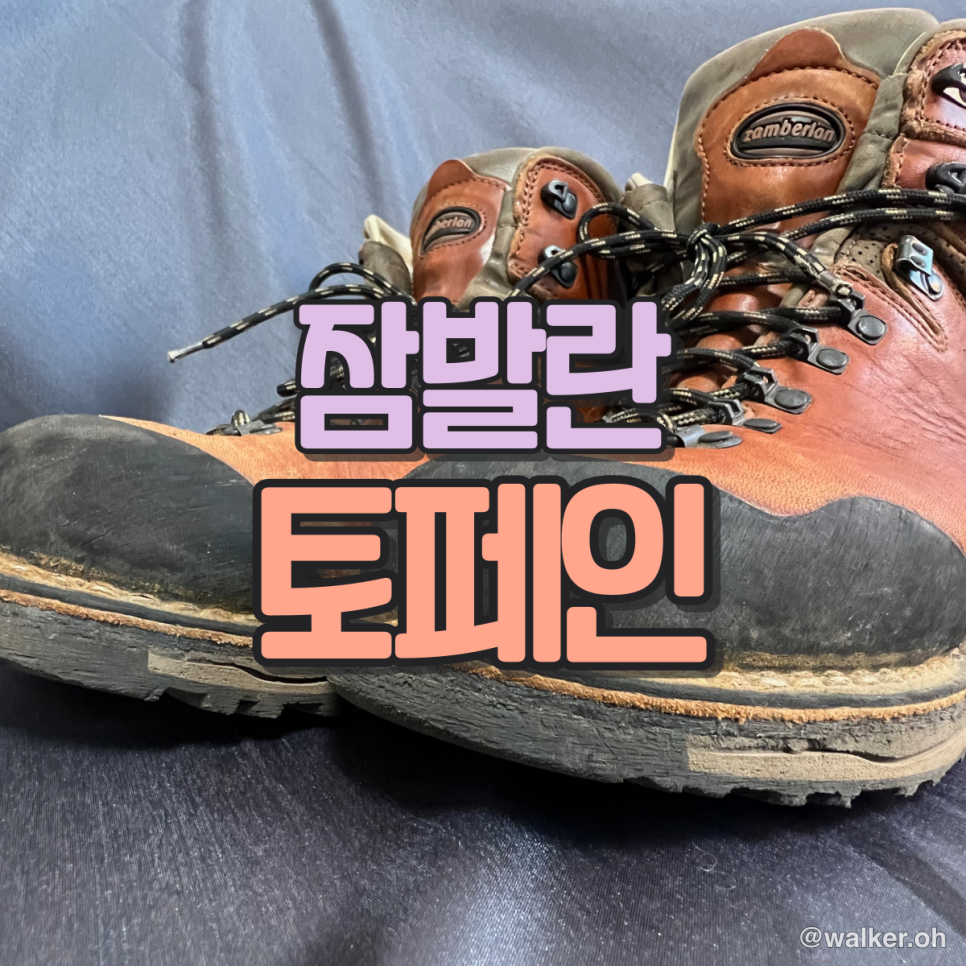
Honestly, I don’t quite trust domestic brands.
I don’t know how things are now, but this is a story from more than 10 years ago.
I bought a pair of boots because they were supposedly resoleable. My foot got wedged in a crack between rocks, and when I twisted it out, the entire sole peeled clean off. I still remember it.
Now, this is partly just me being unlucky. But still… why? Of all things…
That said, there’s no way imported boots would fit Korean feet well.
Westerners’ feet have a low instep and a narrow width — what people often call “knife feet.”
My feet aren’t especially wide, but they’re definitely not knife-thin either.
So this was a problem I had to solve too.
For most people, it’s solved by just buying the boots 1.5 to 2 sizes larger.
You can go try on domestic boots in person, but these days, whether it’s domestic or imported, a lot of people order online without trying them on first. I did the same. In my case, when I bought the Tofane, I ordered two pairs. So I paid the return shipping on one and kept the other, and that’s the one I’ve been wearing.
Hiking boots aren’t fashion shoes. A size difference of 1 or 2 isn’t really an issue.
You can just buy them roomy and wear them, and if they’re a bit big, you tighten the laces a little more. That’s exactly what laces are for.
Imported hiking boots are too slippery to wear.
This one gets passed around like some kind of urban legend… and it’s really just wrong.
When you actually use them, the sole isn’t the culprit — the conditions are. When the temperature drops, grip suffers; when it rains, things get slippery.
That’s true for domestic and imported boots alike.
If you have to walk on terrain where the grip of your boots becomes a real problem, then you need other solutions as well.
Trekking poles, or an ice axe, or gloves — those are the answer, and at that point you’re already in a dangerous situation.
If it’s not that, then you simply have to walk carefully according to the condition of the ground.
You’re already off-road… so having to watch the ground and walk carefully is, in a way, unrelated to the grip of your boots.
There’s someone who completed the full Jirisan Hwadae traverse wearing Crocs sandals.
His were practically slippers, and he says grip and ankle support don’t matter at all.
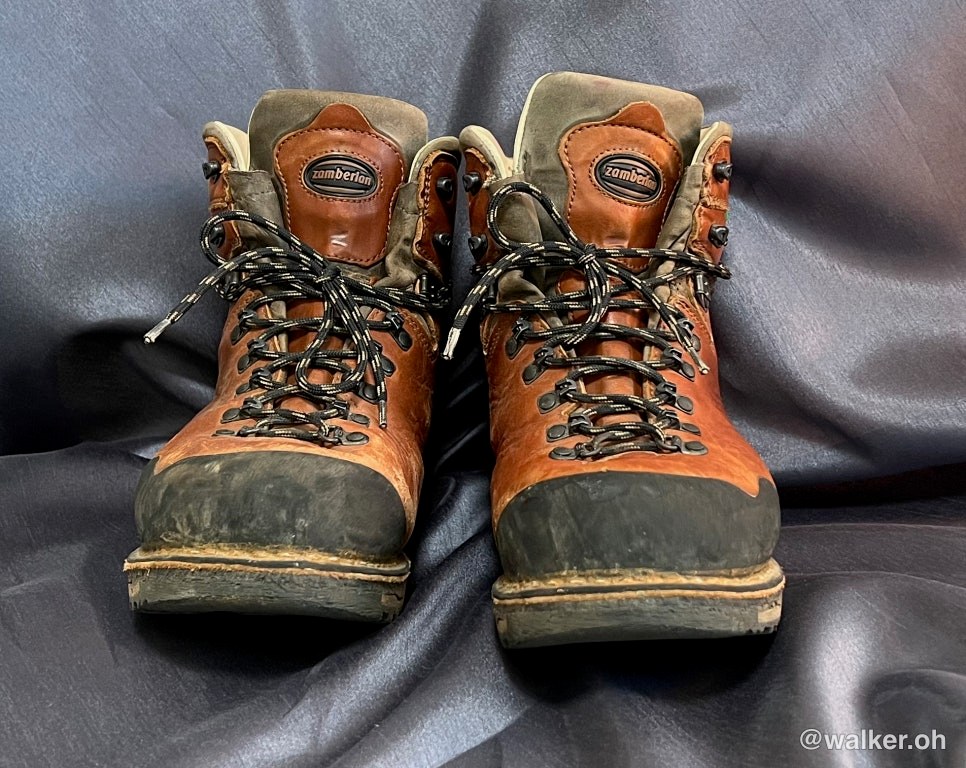
These are about 8-9 years old. I haven’t given them any special, loving care.
Now and then I’d rub in some universal leather balm and dry them out well — but everyone dries their boots out properly, right?
I’ve only done about that much. They mostly live in my car trunk for months at a time.
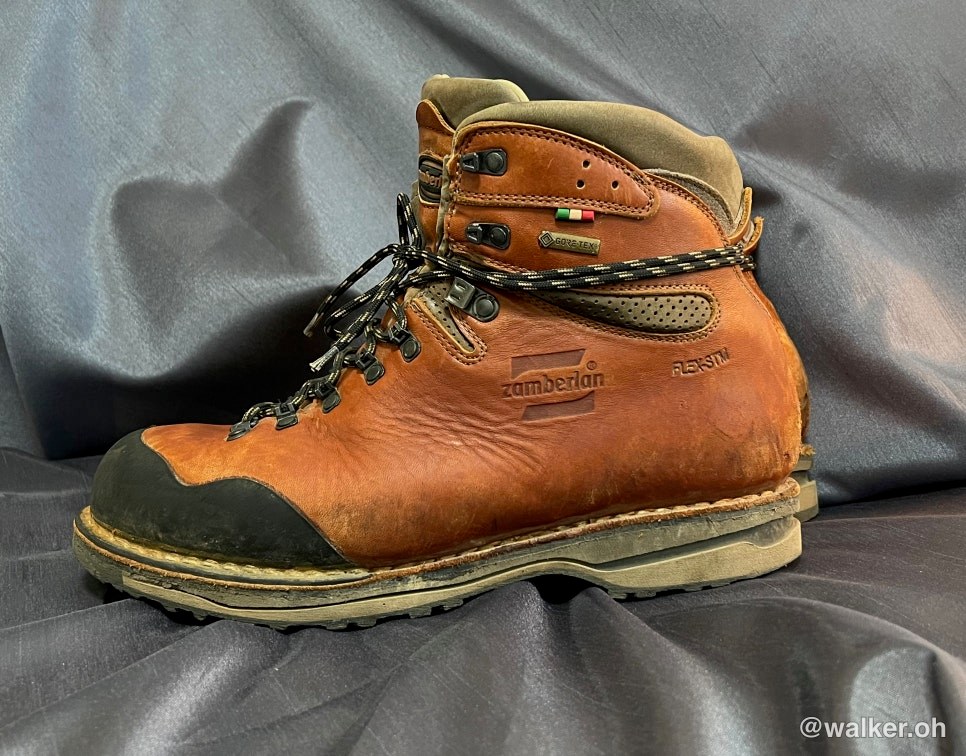
I just loved that shape.
It’s the kind of hiking boot design you’d find in a children’s storybook.
Those stitches… these days people deliberately add stitching as a design element, right? On the Tofane, those stitches are actually sewn-through, real seams.
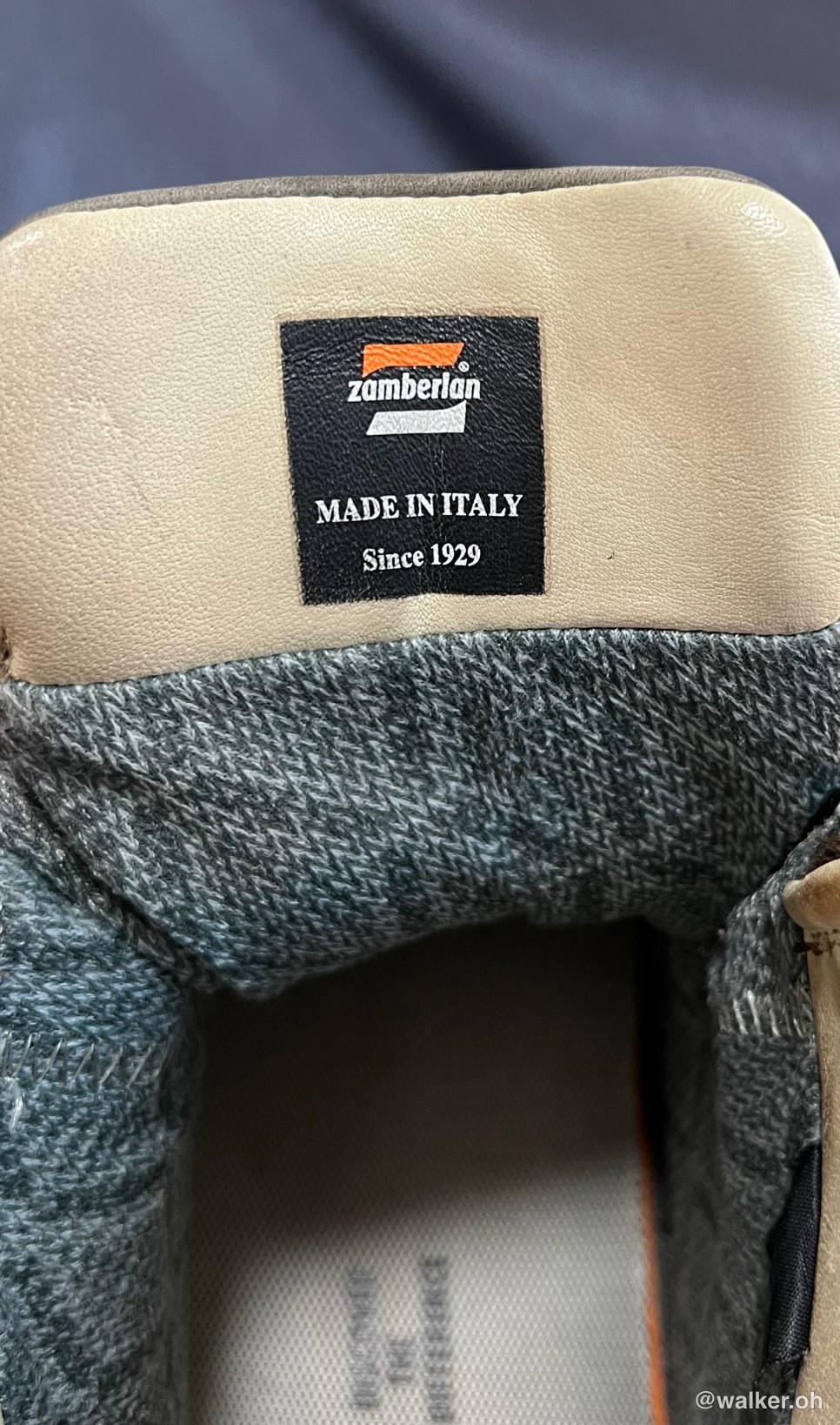
That’s right. They came from overseas.
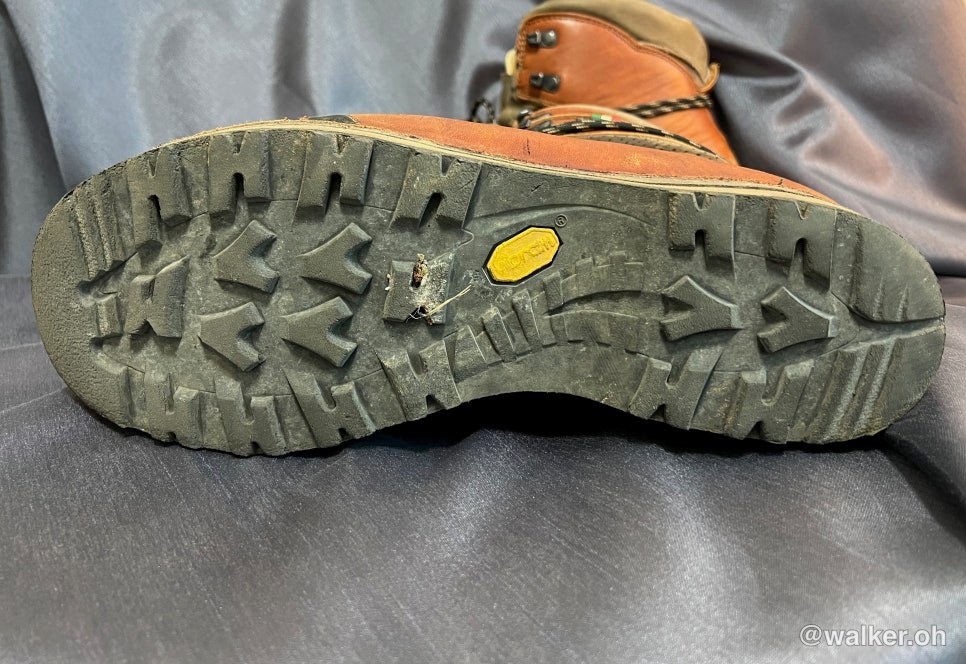
The sole — the source of so much talk and so many complaints.
Honestly, for me, this is more than good enough. Look at the durability after all this wear. ^^;; I haven’t resoled them. Though, admittedly, it’s about time I did…
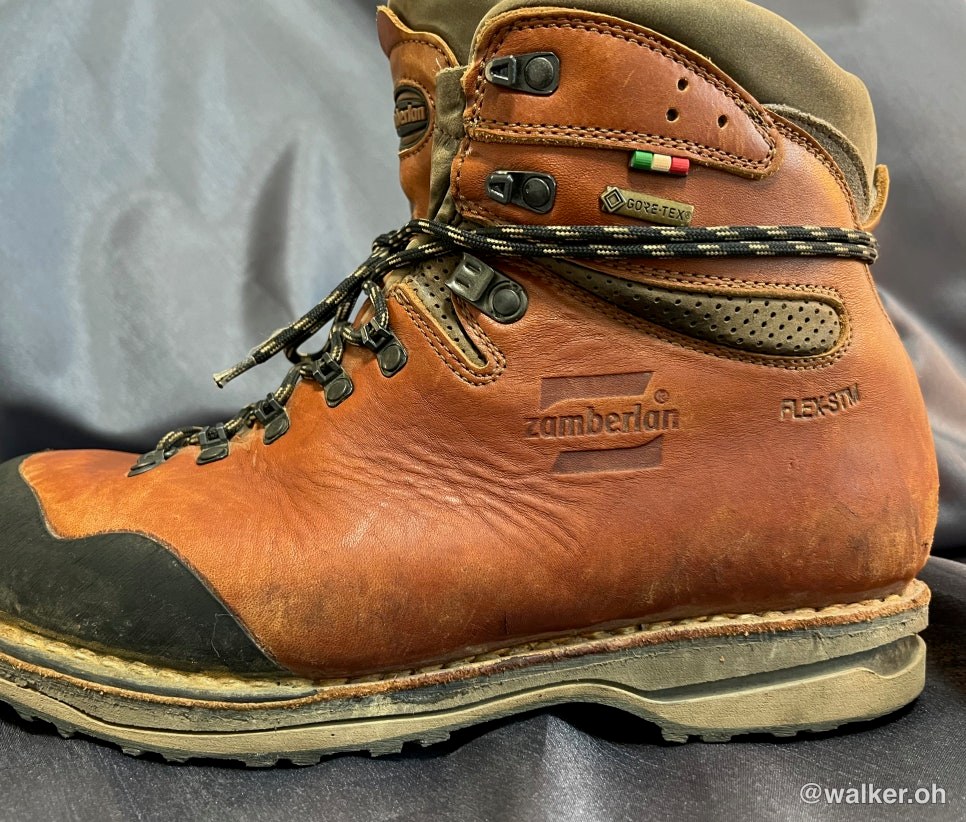
Seriously tough leather… I was worried that the one-piece leather would limit my ankle movement, so I cut and stitched it.
That gives the ankle area a bit more range of motion.
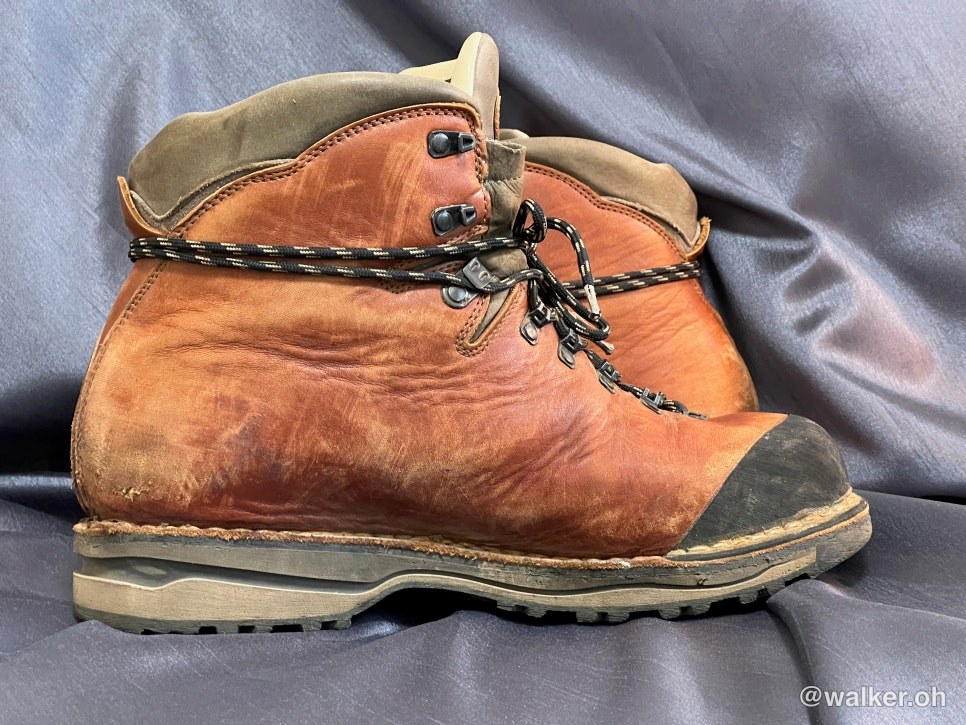
Scratched and split… most of that happened on Bukhansan. ^^;
When all else failed, I’d jam my foot in, hook it on, climb up, and pull it back out.
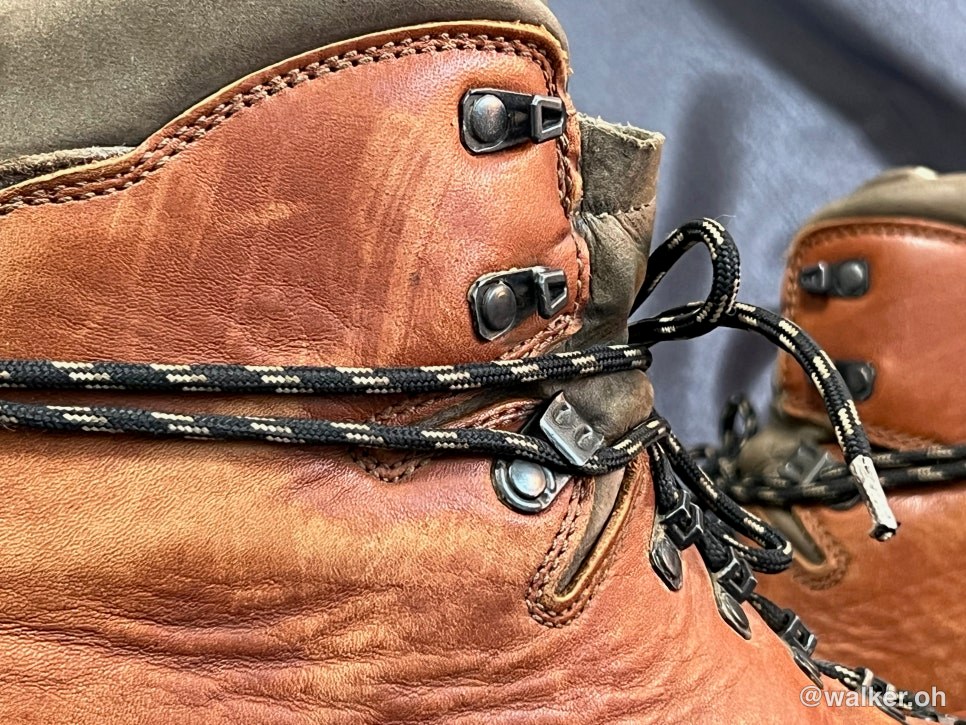
The top three hooks are speed hooks. They’re handy when you want to slip the boots off quickly — heading into a restaurant, or going into “slipper mode” at a campsite.
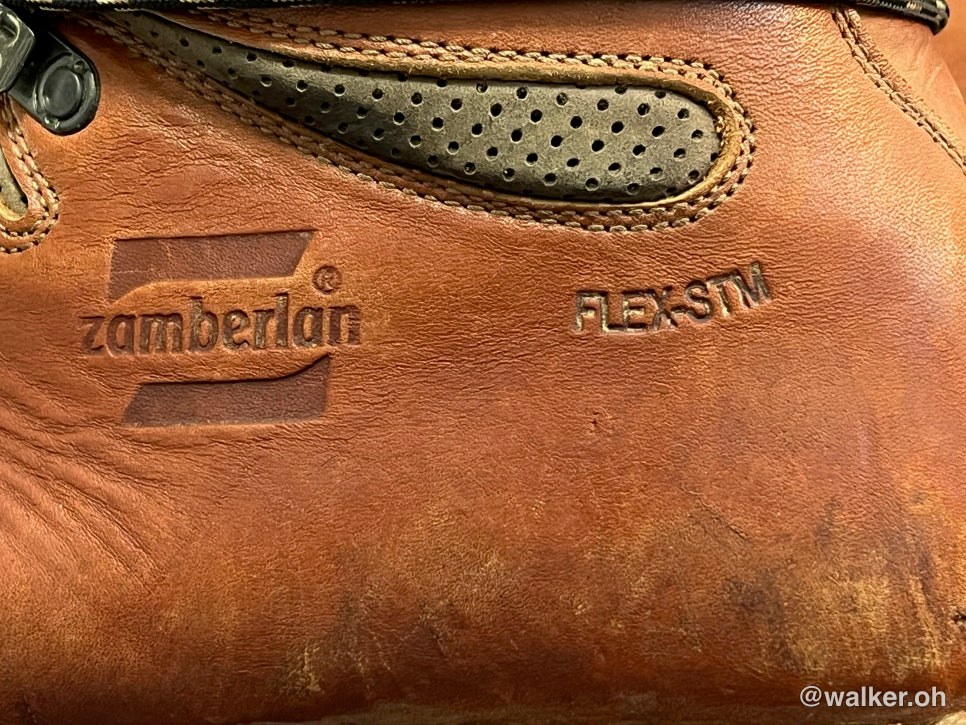
FLEX-STM. I’m not really sure what that feature does.
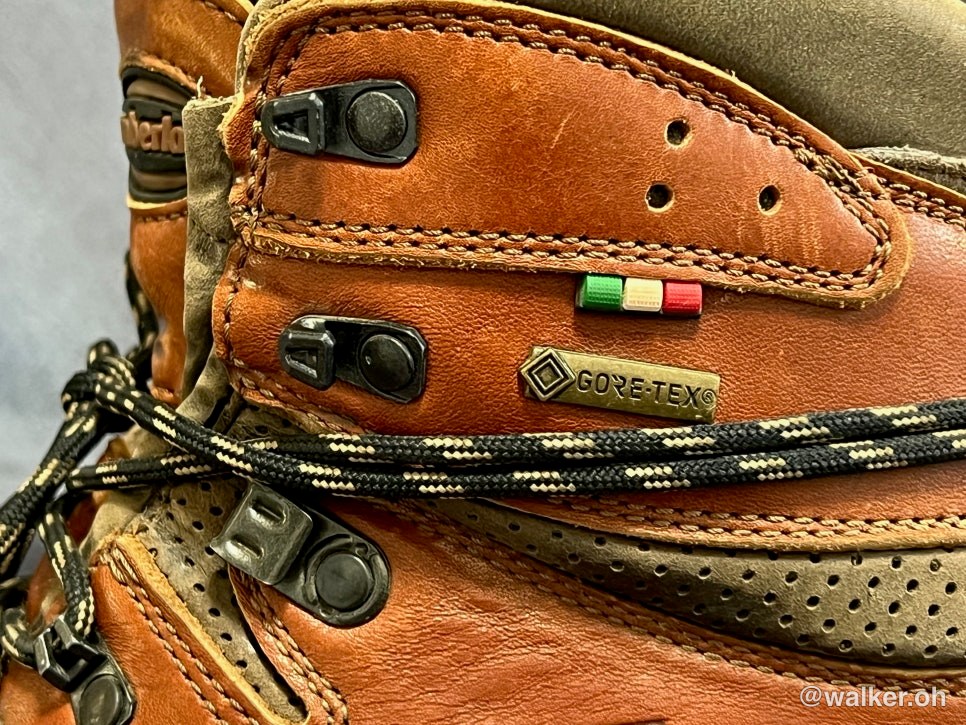
Even with this old a design, they use a bootie made of Gore-Tex film, which helps delay water from getting in while letting internal moisture escape outward.
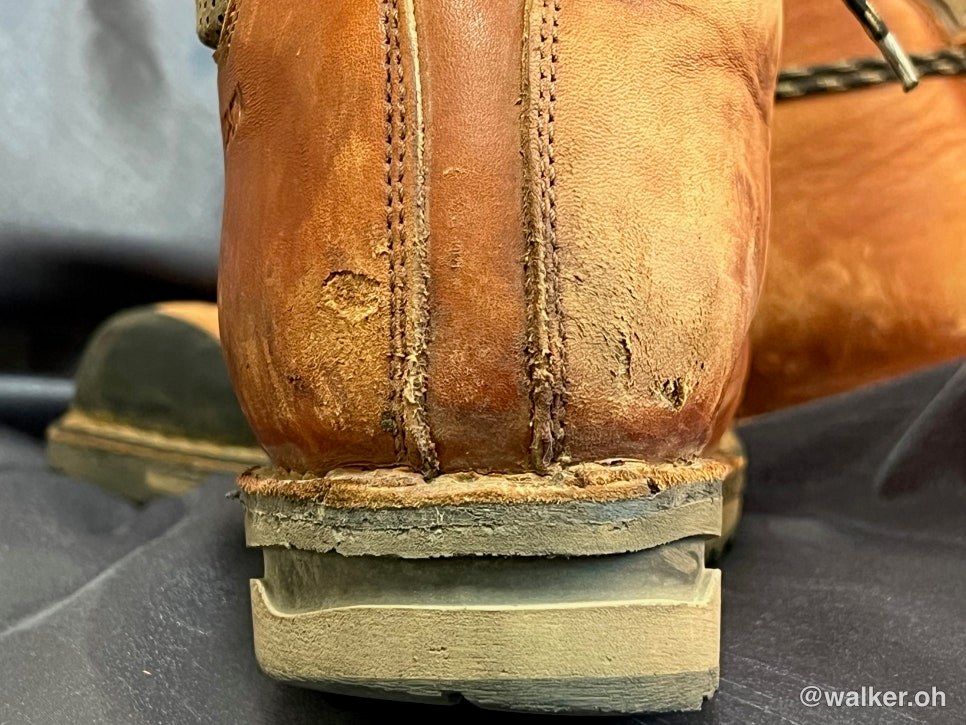
Worn down pretty roughly, huh. But I’d guess there’s still about 50% of their life left.
That spot, actually, I wrecked myself from the start. It’s been like that for years since, and there’s been no problem.
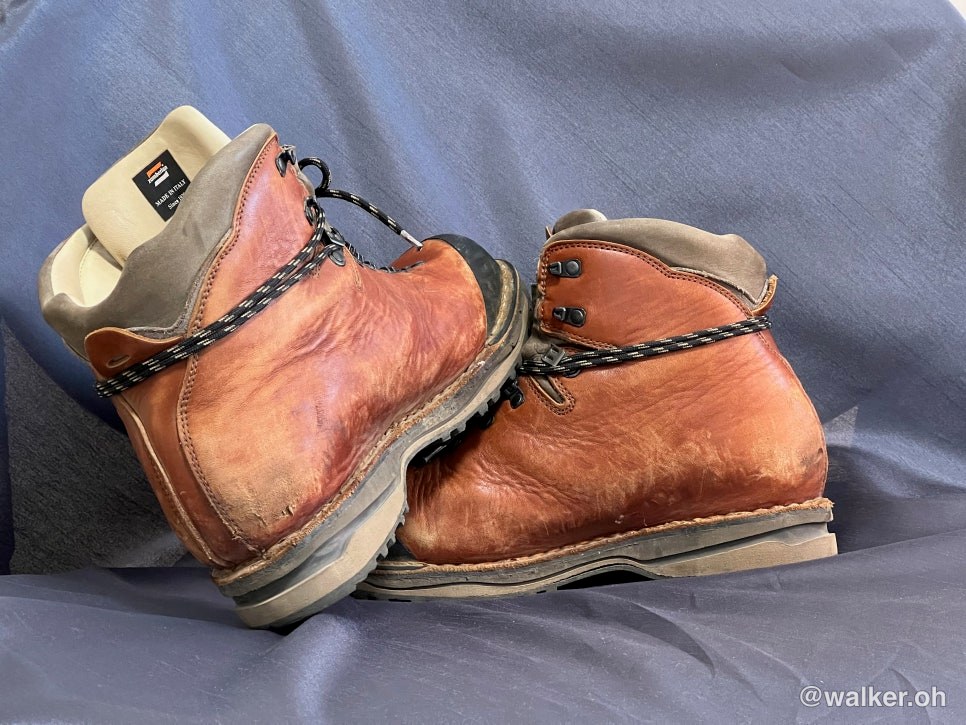
Now that’s the look of a proper hiking boot. This is exactly the feel I wanted.
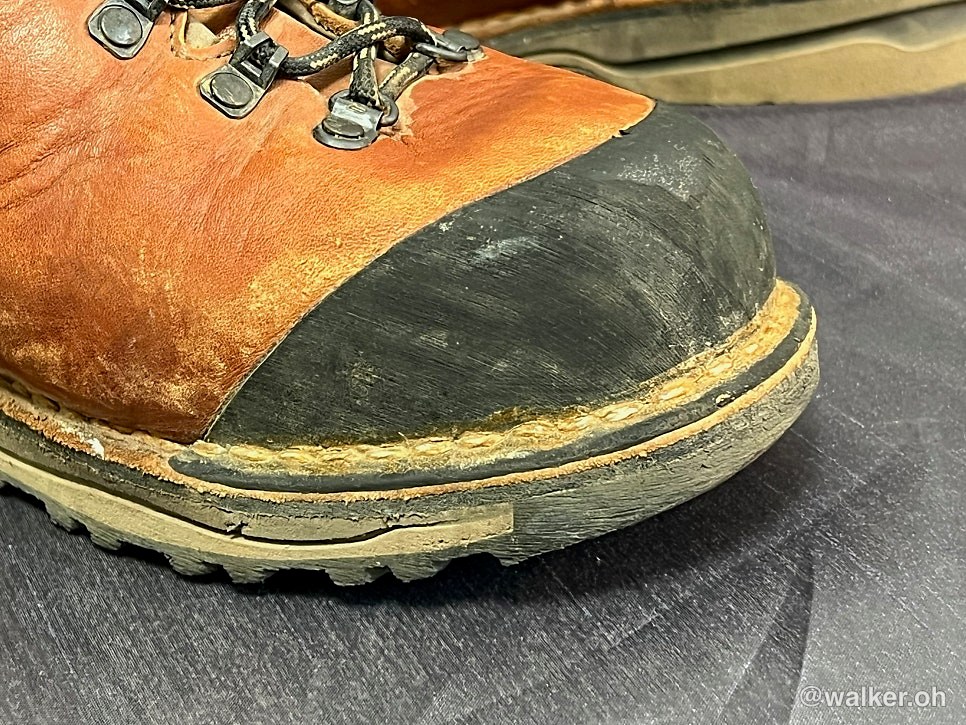
That part where the rubber is layered on once more is called the toe cap.
I suppose a single layer of leather wasn’t quite enough. So they reinforced it.
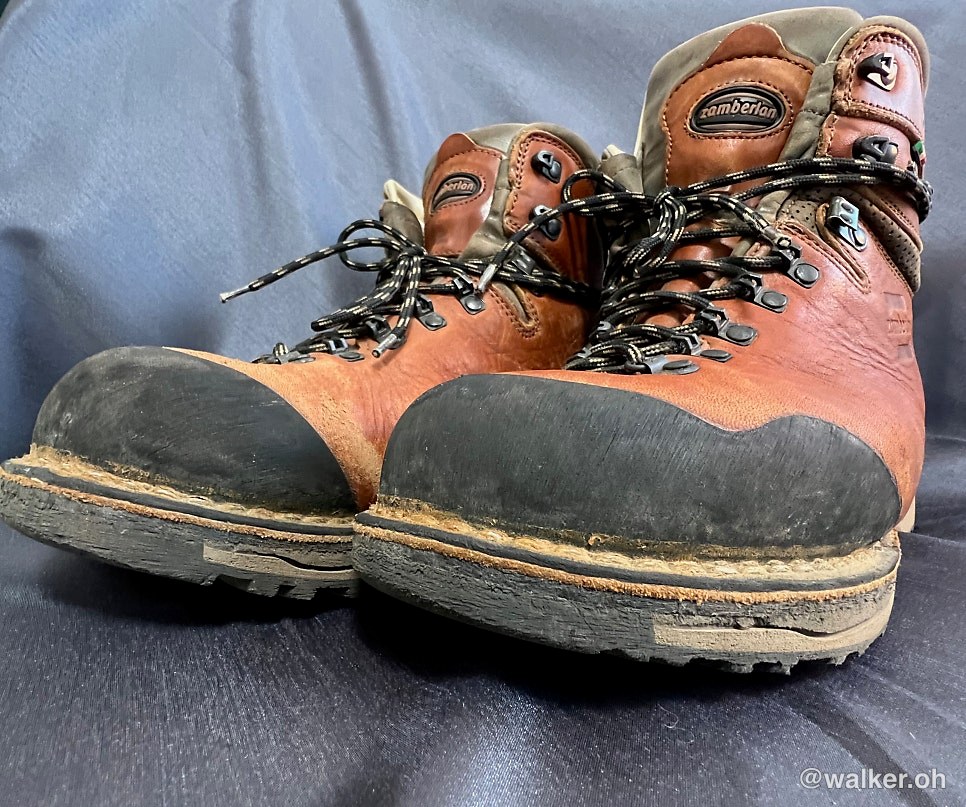
You can see a strip of leather between the sole and the upper. That part is the welt.
The Zamberlan Tofane is said to be made using the Norwegian welt construction.
It’s a method where the upper, the welt, and the sole are stitched together a total of three times.
The Goodyear welt method, as I understand it, uses two rounds of stitching.
Whether a couple of extra stitches actually make it sturdier is something the consumer really has no way of knowing. And the “handcrafting” and sewing are done by machine.
What’s made by hand depends on consistent quality control, and the luck of the draw always comes into play.
I got lucky — mine still have no defects.
Despite their age, they’re still nicely waterproof. The leather is all cracked, but the structure hasn’t broken down yet.
I rely on the Tofane from late fall through early spring.
For the first five years, I wore them through all four seasons.
That makes sense, though — they were my only pair of boots.
These days I’ve been learning trail running, so I’m trying to hike really light.
Even so, from late fall to early spring — when your feet get cold and you have to tramp through soggy ground — there’s no boot like these.
Despite how they look, they grip the foot snugly.
For sizing, I went up 1.5.
I normally wear around a 275. The Zamberlan Tofane is, I think, 287mm or so.
There’s room around the eyelet area, so you just tighten them as much as you want, and you adjust depending on your sock thickness.
For deep-winter snowy mountains, I wear heavy crew socks. If the boots are too small, they feel cramped and you can’t lace them up well.
For boots you’ll also wear in winter, leave 1.5 sizes of room, and run separate summer shoes in the summer — that works out really nicely.
And that’s been my old friend, the Tofane.
Thank you.
#ZamberlanTofane #Zamberlan #WinterHikingBoots #FourSeasonHikingBoots #FullGrainLeatherBoots #HikingBootReview
Contact: bumseok.view [at] gmail [dot] com
Comments