Arc'teryx Alpha SV Review: The Flagship Gore-Tex Hardshell
Daily · Published 1/6/2023 ·
Today I want to talk about the Alpha SV — the cash cow and flagship product of Arc’teryx, a brand even people who’ve never set foot on a mountain seem to know these days.

It’s a Canadian brand. From what I understand, it got its start when a group of climbers couldn’t find a jacket they liked, so they just made their own.
These days it looks like a lot of Chinese investment has gone into it.
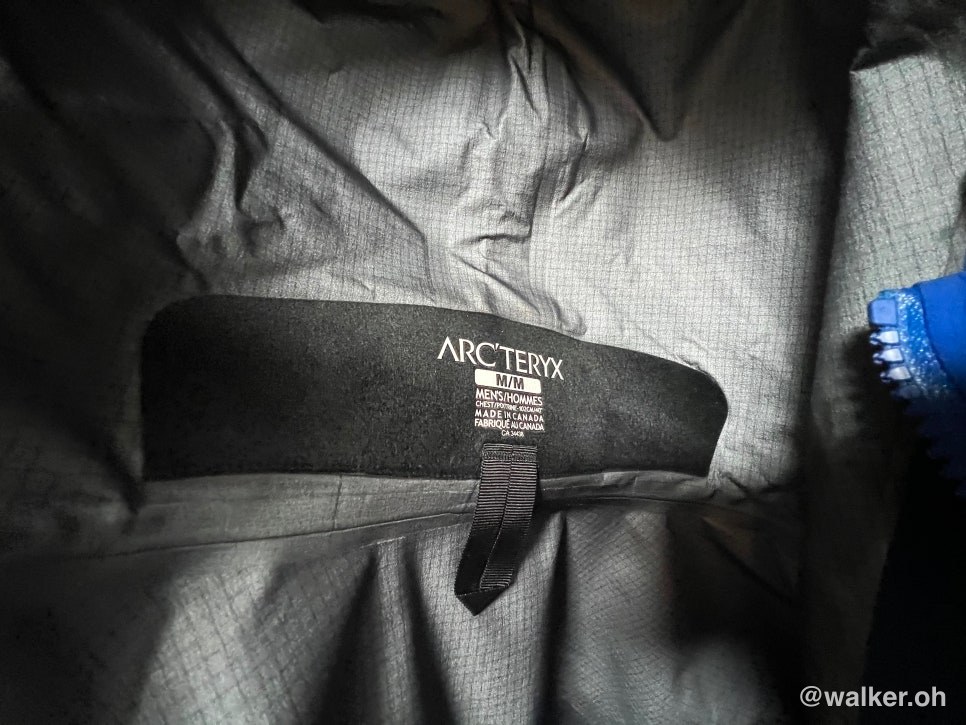
The jacket in that photo is a Canadian-made one.
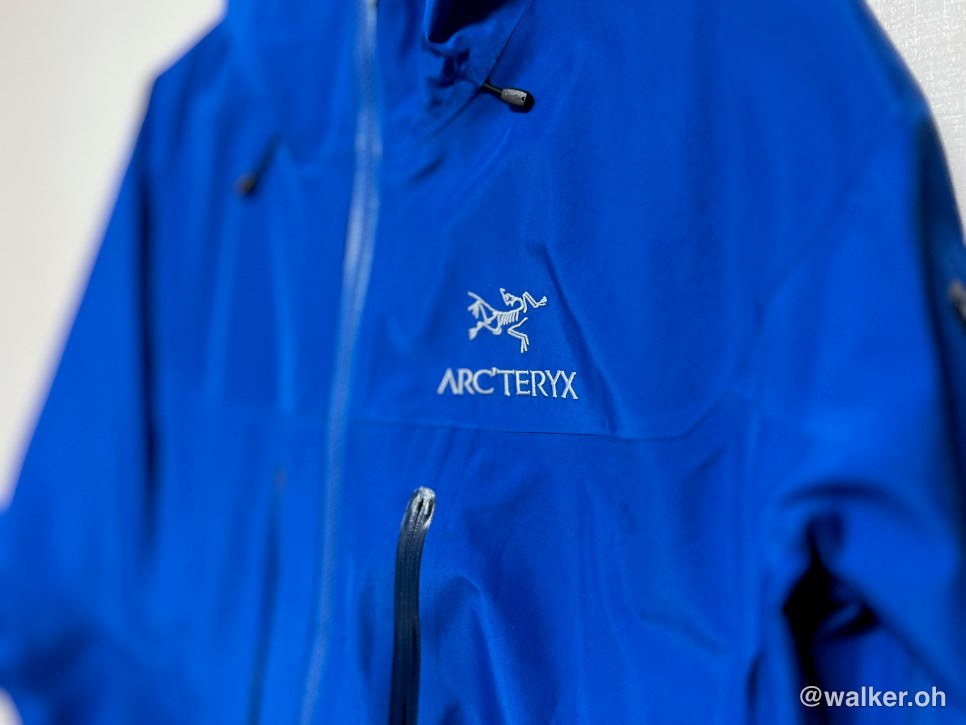
That logo blew up after Jae-yong oppa wore one.
Thanks to that, a jacket I used to throw on even when I wasn’t headed up a mountain now feels like something I should only wear on the mountain. ^^;
Pockets
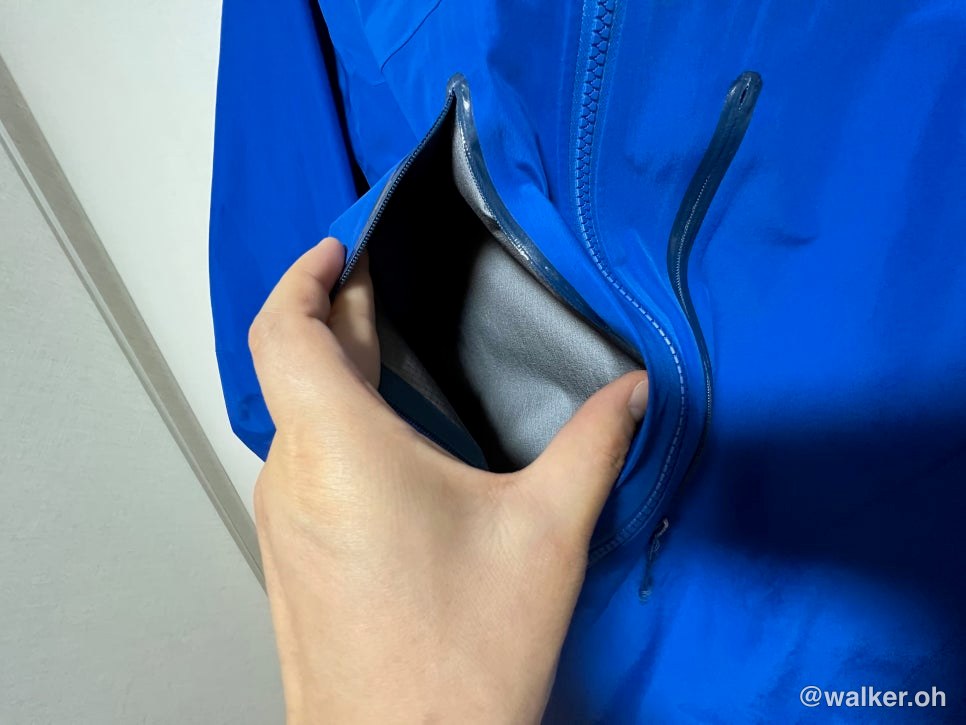
There are two pockets up on the chest, with waterproof zippers.
These chest pockets are incredibly handy because you can still get to them even when you’ve got a pack on and the hip belt is cinched, blocking the lower arm-level pockets. On really cold days, since they sit right over your chest, you can crack open a couple of hand warmers and tuck them in there — toasty.
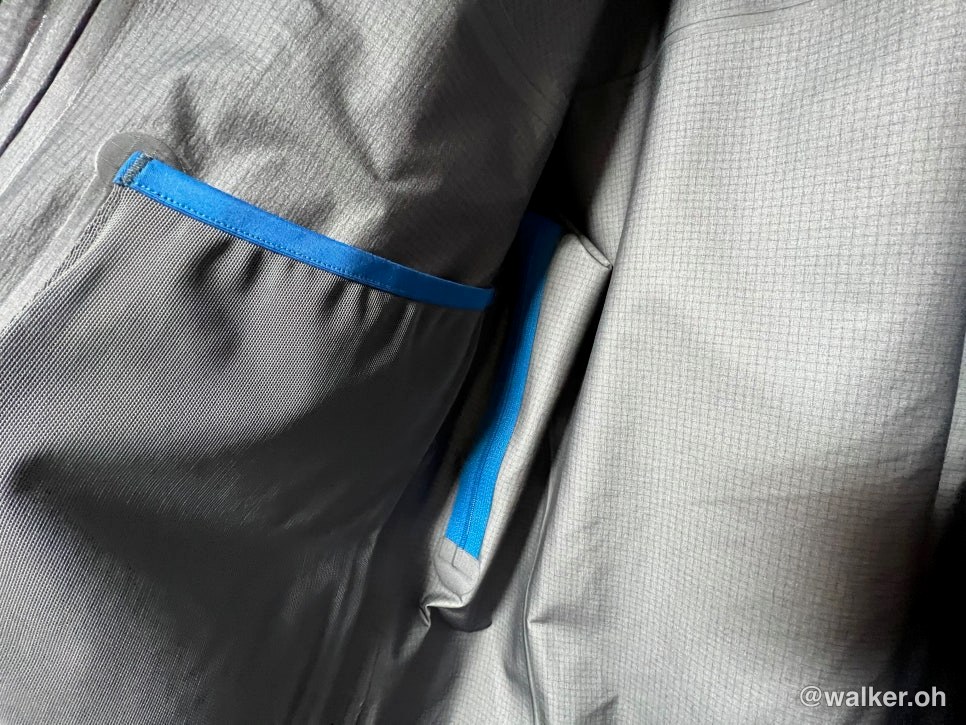
This is the inner pocket — the one you reach with your left hand crossing over to the right side.
It’s a great spot to stash some trail snacks and grab a bite without breaking stride.
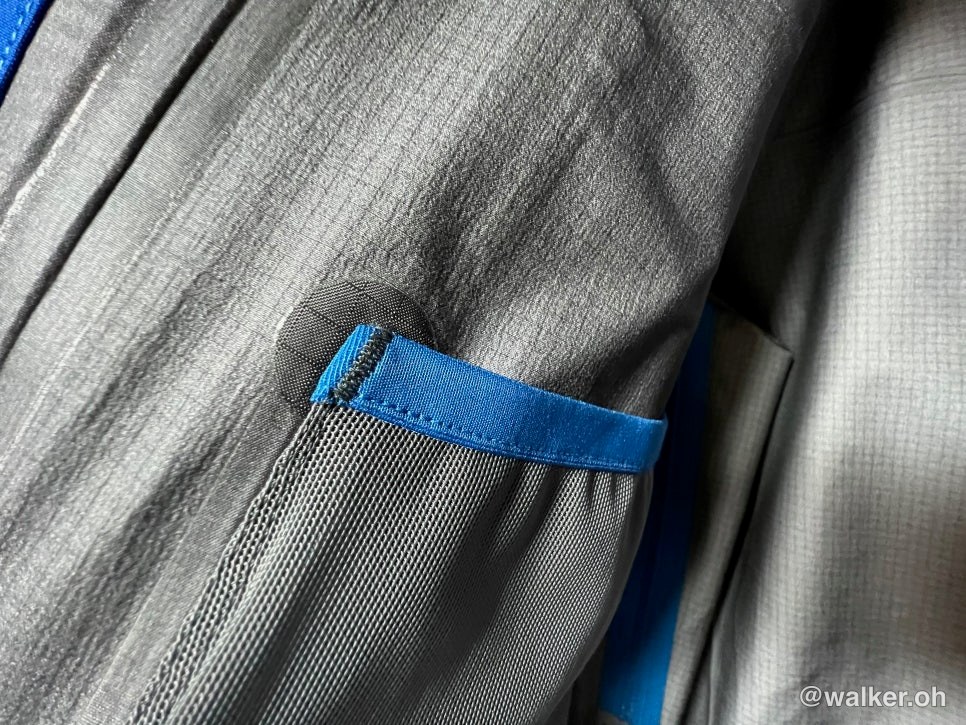
Right where the stitching starts, there’s seam-sealing tape, plus a little coin-shaped patch of extra reinforcement.
These folks are dead serious about waterproofing.
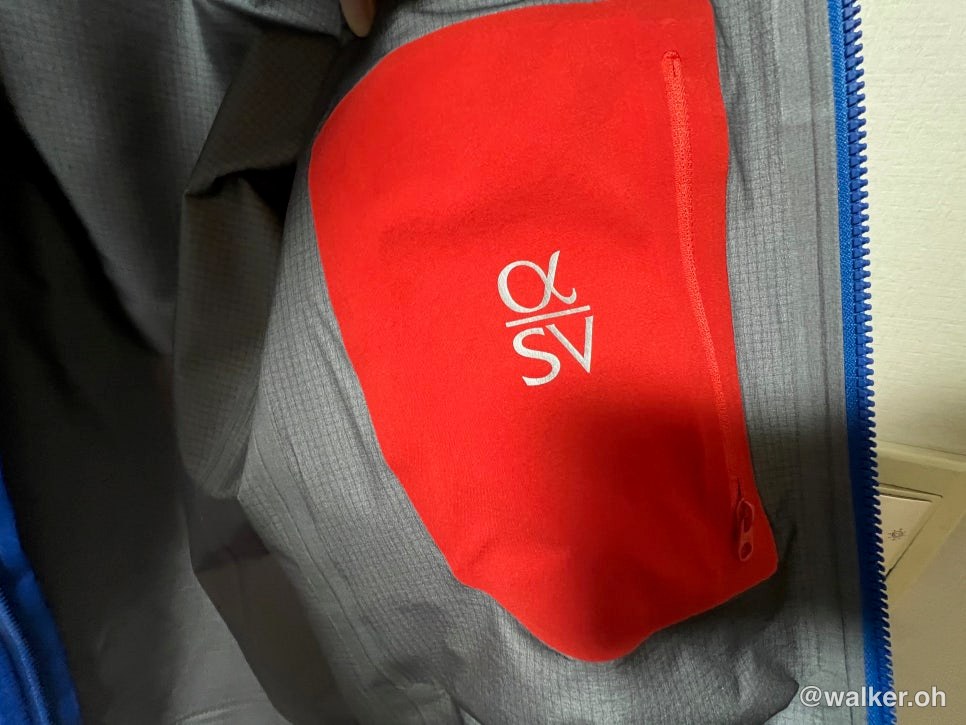
This is the inner pocket you’d use by reaching across to the left chest with your right hand.
That little red pocket has the product name printed on it — a detail that only shows up on Arc’teryx’s Gore-Tex pieces and is missing on jackets like the Gamma LT.
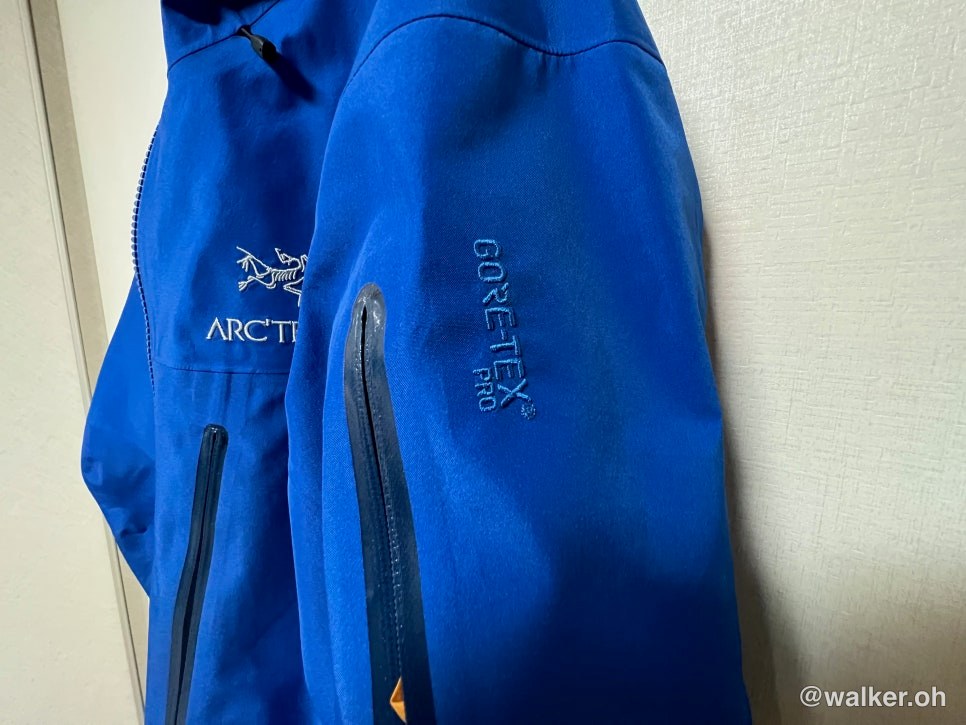
There’s an extra pocket on the left arm. Again, great for carrying trail snacks. It’s also handy when you’ve finished a sunrise hike and want to pull off your headlamp and stash it for a bit while you move on.
Ventilation
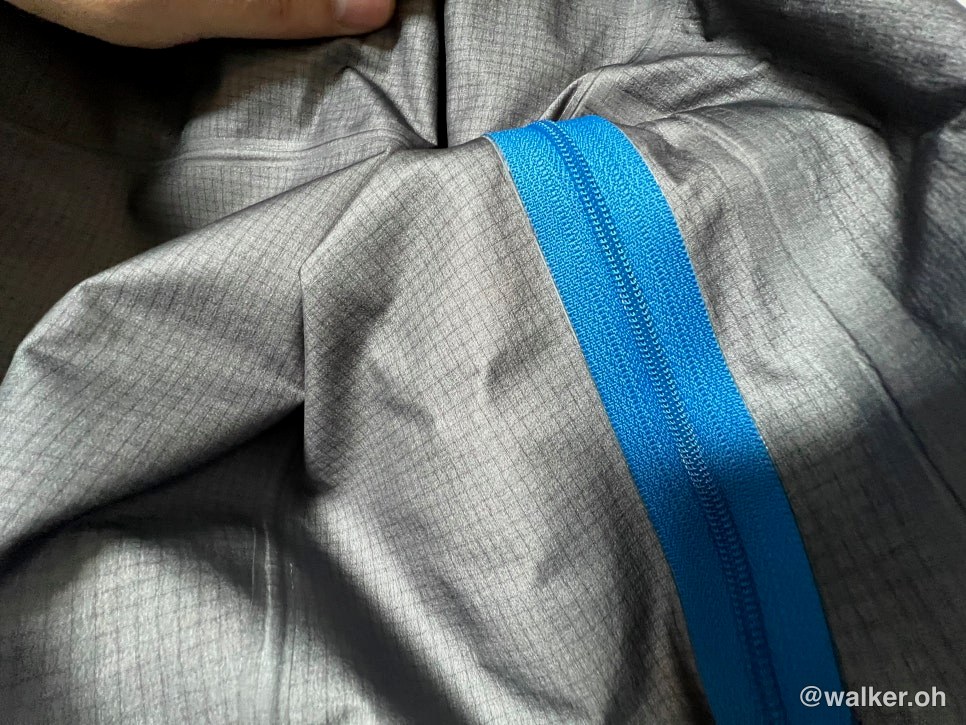
You can open it up almost 70% of the way, from the arm down to below the side of your torso.
This is a hardshell, so once your body heat starts climbing, it can get really hot. But peeling a jacket on and off while you’re hiking with a pack on is a real pain. For exactly those moments, opening up both sides makes regulating your temperature so much easier.
For hardshells, or jackets made of materials that don’t breathe well, I really wish they’d all have ventilation.
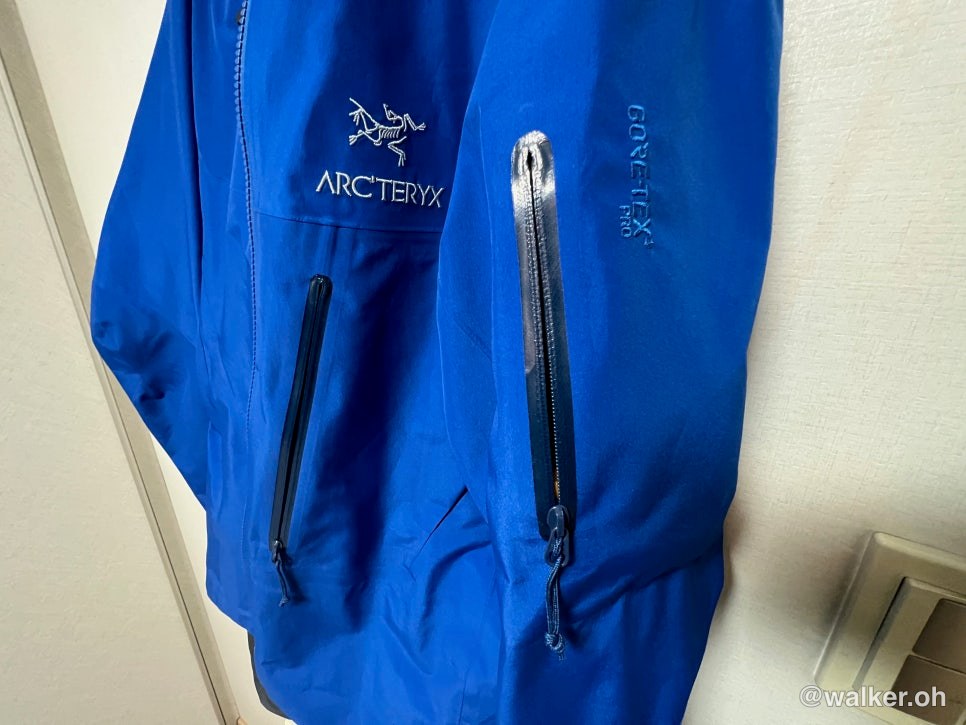
Every zipper is waterproof, so no water gets in.
The Alpha SV is fundamentally a waterproof jacket, so this is a given, really — but I guess the zippers matter too.
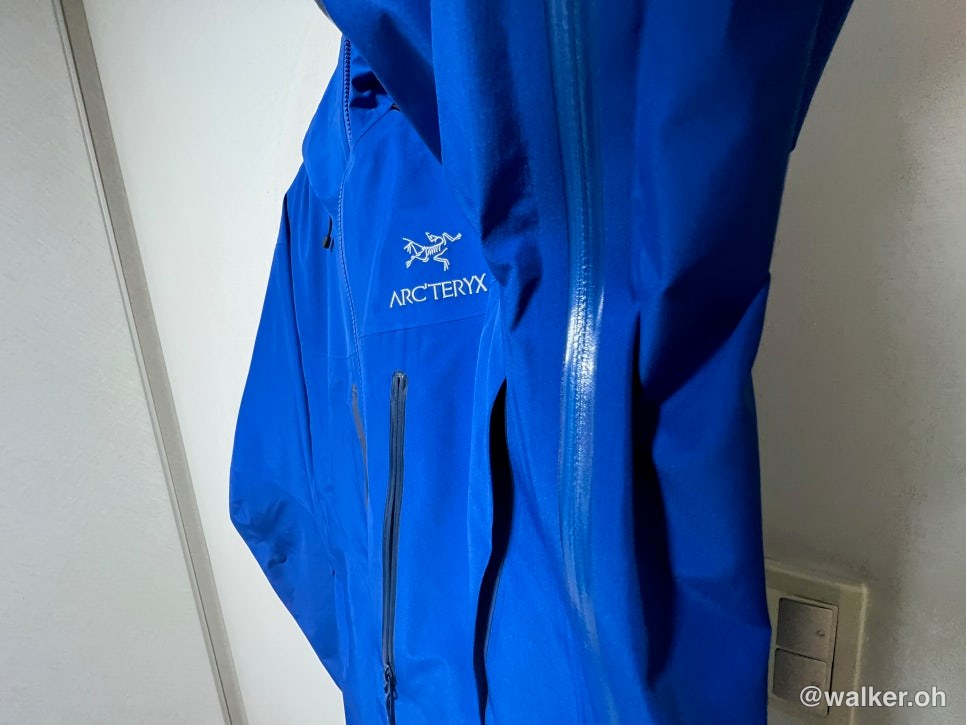
Here’s the side ventilation seen from the outside.
Stretch your arm straight up and pull down with the opposite hand, and it slides down easily. Once you get the hang of it, you can do it without even looking. Even with winter gloves on, it’s no trouble to adjust.
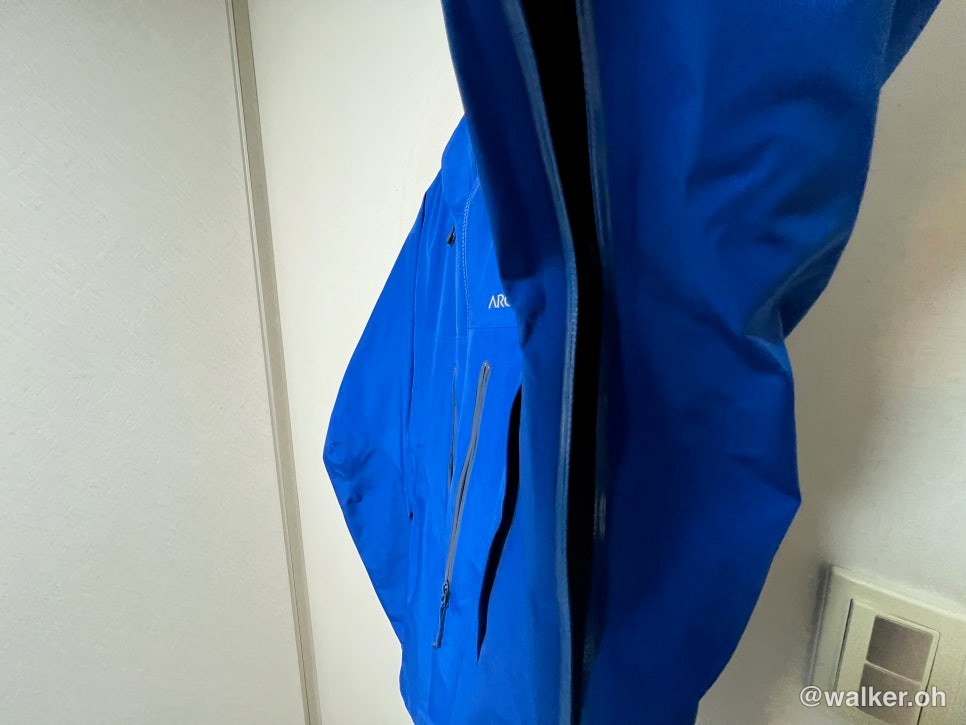
Pull it down and it opens right up, letting you manage your temperature.
Given where it sits, rain doesn’t really blow in either, so even with a fair bit of rain during a late-autumn traverse of Jirisan, I stayed nice and dry.
Storm Hood
Jackets from the proper brands — Arc’teryx, Rab, and the like — mostly have a really big storm hood, or hood section.
I’ve heard this is so you can pull the hood up even while wearing a helmet. For rock climbers, who have to put a jacket on over a helmet, that’s apparently the reason.
Because of that, you also need to be able to wear and cinch the hood without a helmet on, so they add adjustment bands to match.
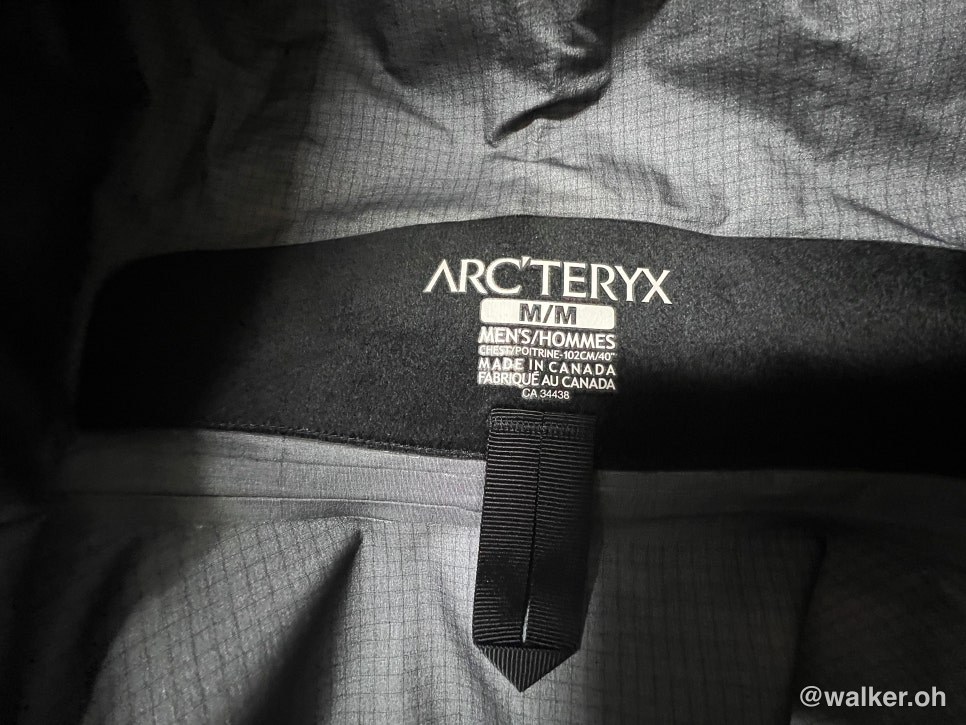
It’s Canadian-made — though these days I’m not really sure where they’re produced.
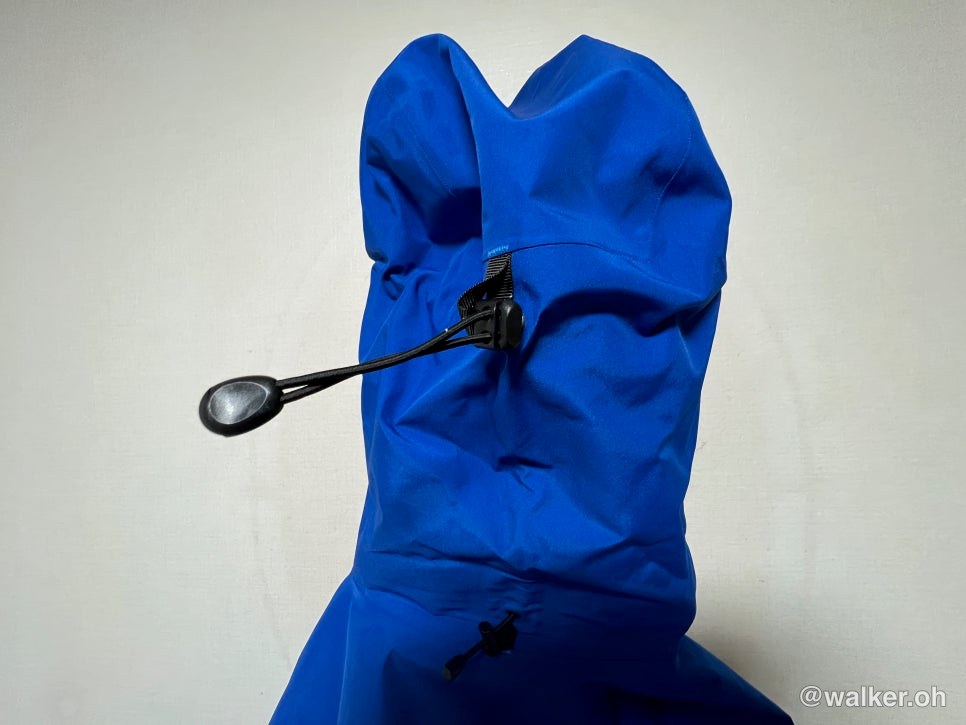
First, you can adjust the overall size of the hood from the top.
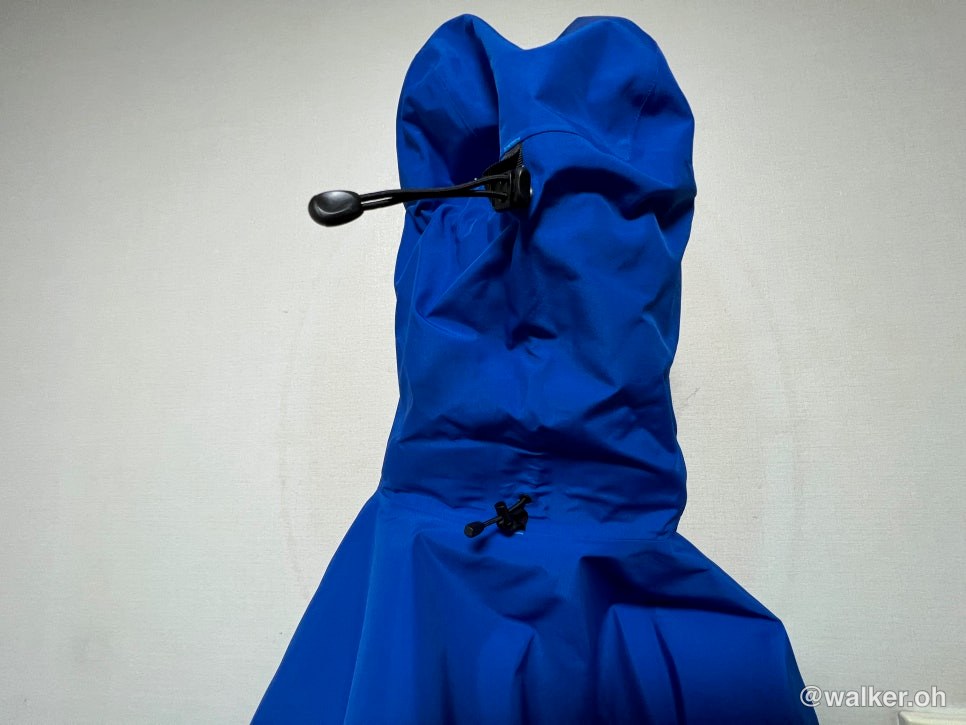
Look at the bottom and there’s another drawcord. You can fine-tune the fit around the neck.
There are also drawcords on both sides at the front, so you can adjust the entire diameter of the hood.
That way, whether you’ve got a ball cap on underneath, a helmet on, or nothing at all, you can dial in the hood for any situation.
In a real downpour, adjusting the hood properly is what keeps rain out of your eyes — it lets you hike along almost like you’re driving in the rain.
The Rest of the Details
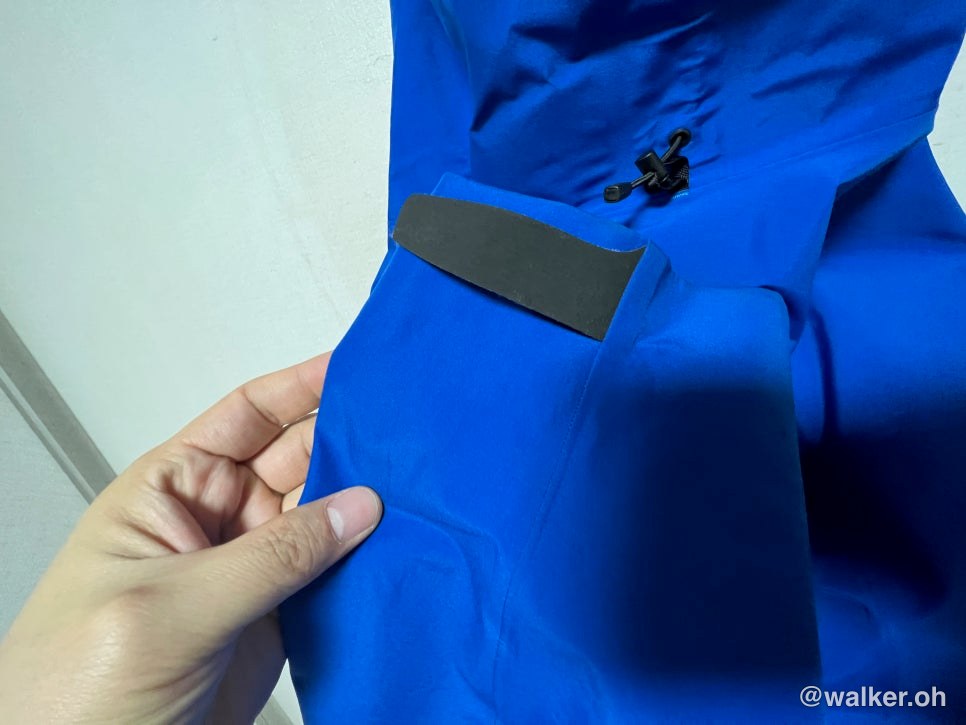
The Velcro at the wrists is pretty standard.
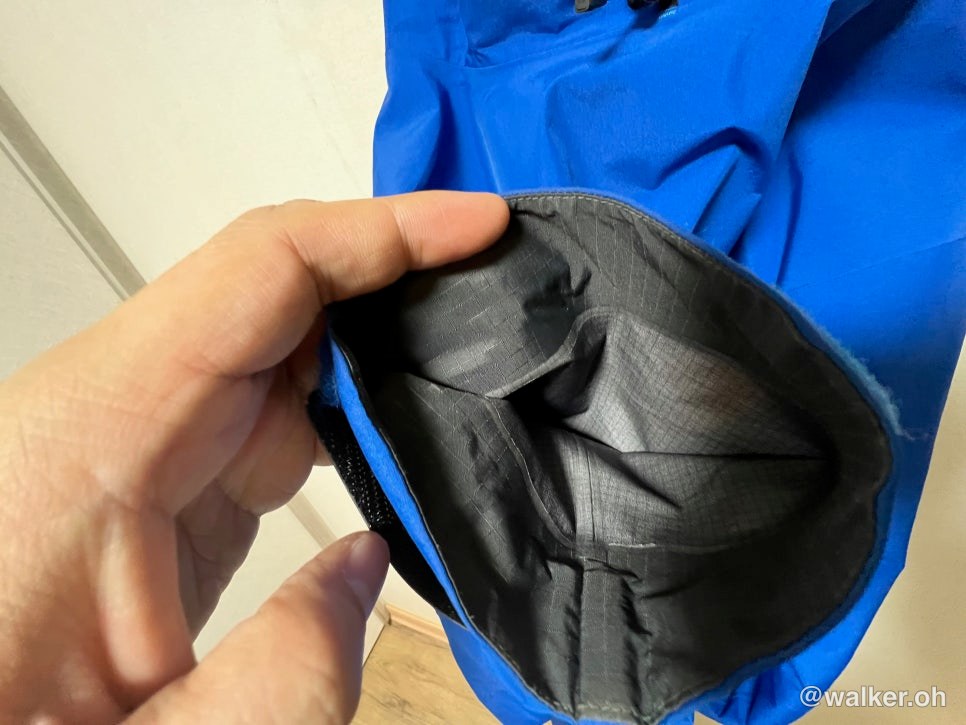
The interior is just plain Gore-Tex.
Among hiking gear, hardshell jackets are seriously expensive. I bought mine figuring that getting one proper piece and using it for a long time would actually save money in the end — but ironically, it’s the item I get the least use out of. I only break it out when it’s genuinely cold or raining. ^^;
Still, it’s a piece that gives me real peace of mind. At national-park-grade mountains, a small gear miss can mean real suffering, and after going through a situation or two where pulling this out without a second thought made everything okay, you end up rolling it up and carrying it in your pack even in midsummer — even though you barely ever use it.
I’d suggest buying a hiking jacket one size up.
This isn’t fashion clothing; to actually wear it on the mountain, it has to handle a range of conditions. If it fits too snugly, you can’t layer it over a puffy. It doesn’t matter in summer, but in winter you pile on the layers starting from the base layer, and a too-tight jacket can’t accommodate that.
The arms come out quite long, and there’s a reason for it. When you hike, you swing your arms back and forth a lot and reach overhead to grab ropes or ladders. If the arms are short, that hikes the sides up, and eventually the area below the hip belt gets exposed outside the jacket and steals your body heat. So just go in knowing the arms are meant to be long. The back is cut long over the rear for the same reason.
For my softshell I use the Gamma LT, and for my hardshell I use the Alpha SV.
I hear there are a lot of hybrid-material jackets out these days, so I should look into those and maybe add one to the collection.
Thanks for reading.
#arcteryx #alphasv #arcteryxalphasv #arcterix
Contact: bumseok.view [at] gmail [dot] com
Comments